Gallery
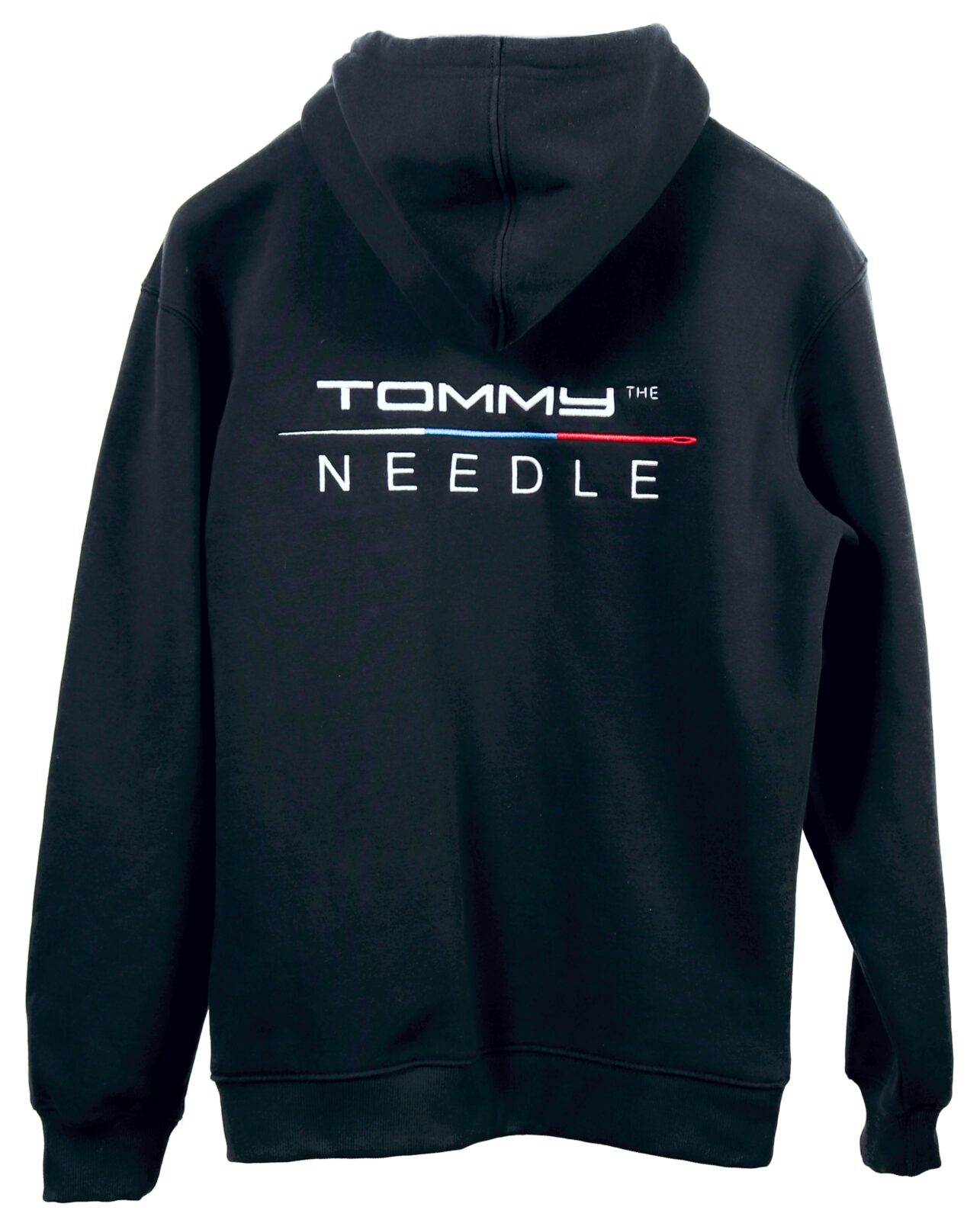
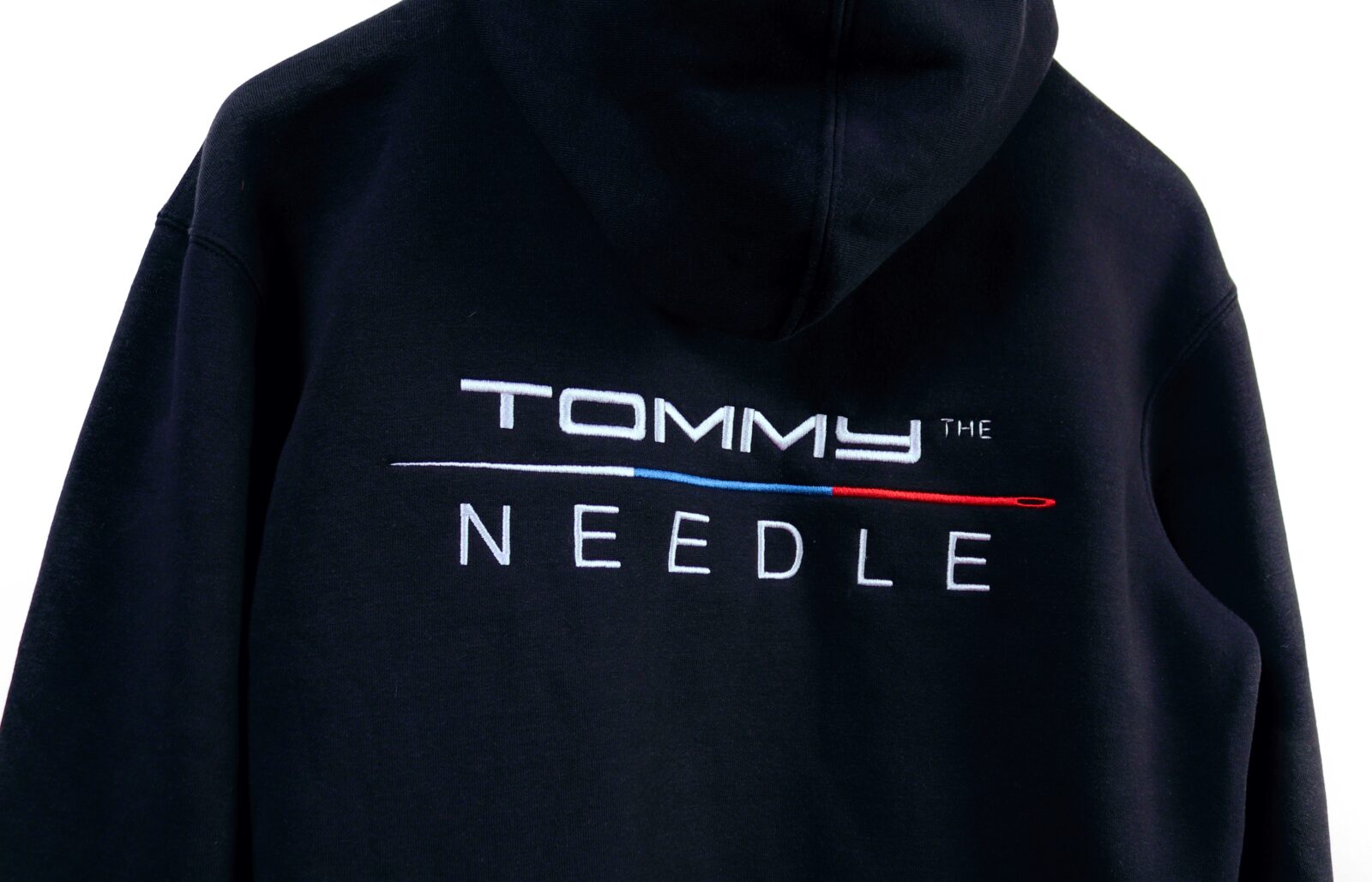
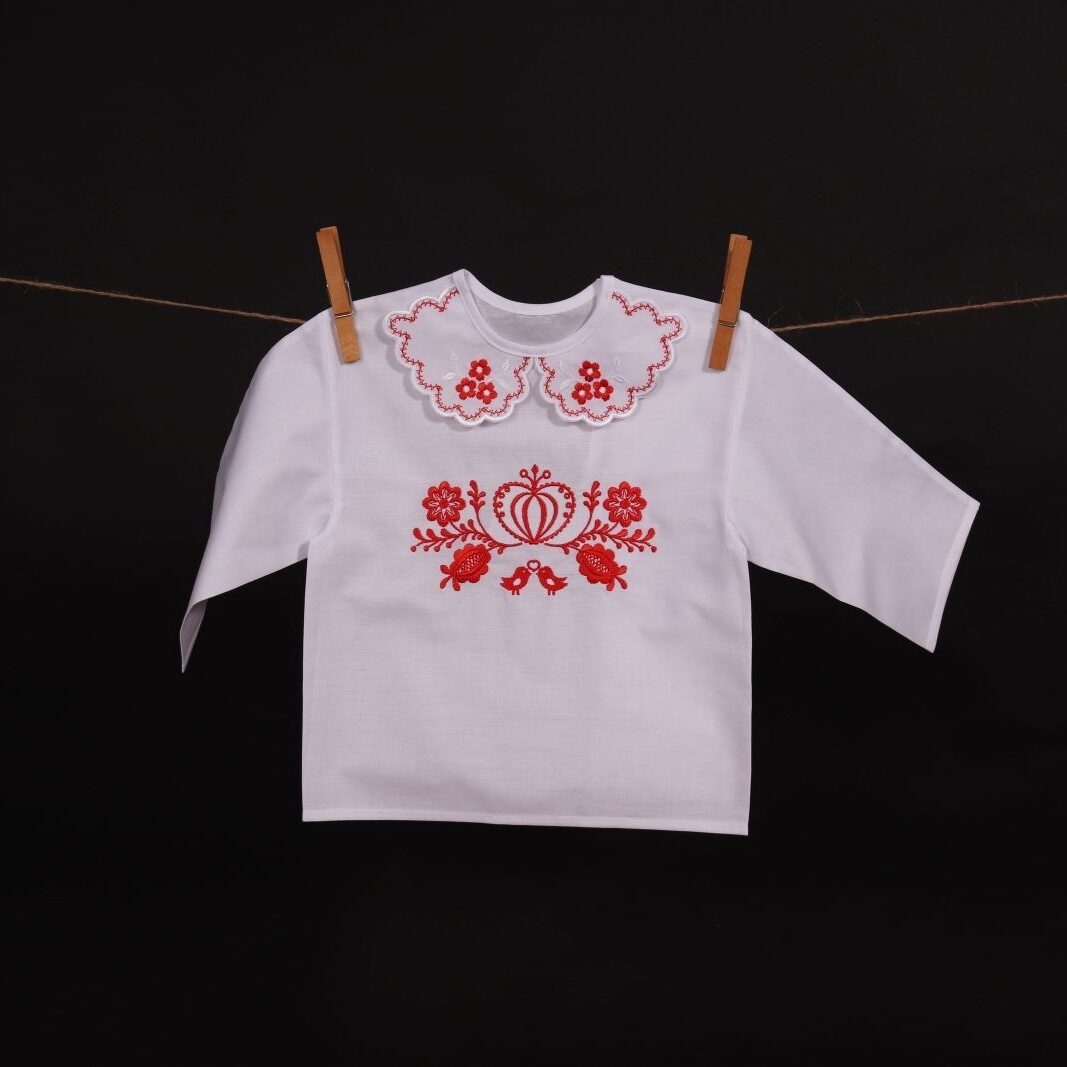
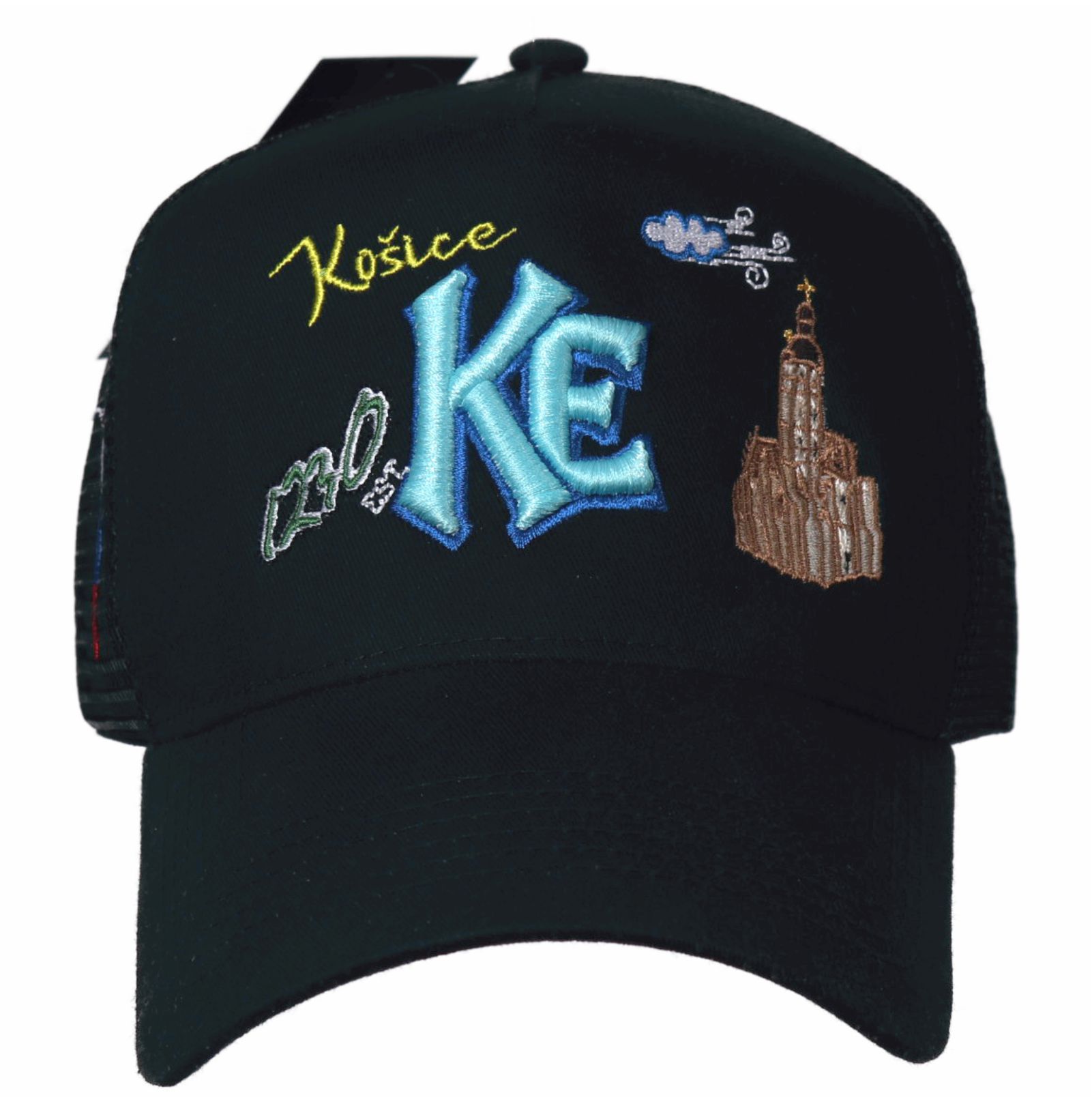
In our gallery, you’ll find examples of machine embroidery, threads, patches, 3D embroidery, appliqués, and prints.
Machine Embroidery
Creating high-quality embroidery is no easy task, which is why it takes years of experience. We’ve been doing machine embroidery for more than 25 years, and during that time we’ve programmed tens of thousands and embroidered hundreds of thousands of designs for our clients. Our many years of experience guarantee a fast—but above all, flawless—production process, with the highest quality of workmanship. We have the capacity to produce large quantities, but we’re also happy to produce smaller orders.
Factors affecting the appearance of embroidery:
1. Programming— stitch type, understitch type, stitch direction, stitch density, stitch width, order of individual embroidery segments, placement of segment endings, shortening or lengthening of certain segments depending on the type of material being embroidered, overlapping of individual embroidery layers
2. Embroidery —frame type, type and number of backing materials, proper securing to the frame, machine settings, thread tension adjustment, embroidery speed, trimming threads, selecting the correct needle type, and, most importantly, the quality of the embroidery machine
3. Fabric— the fabric on which the embroidery is done also has a significant impact on the appearance of the embroidery (the sturdier and smoother the fabric, the more beautiful the embroidery)
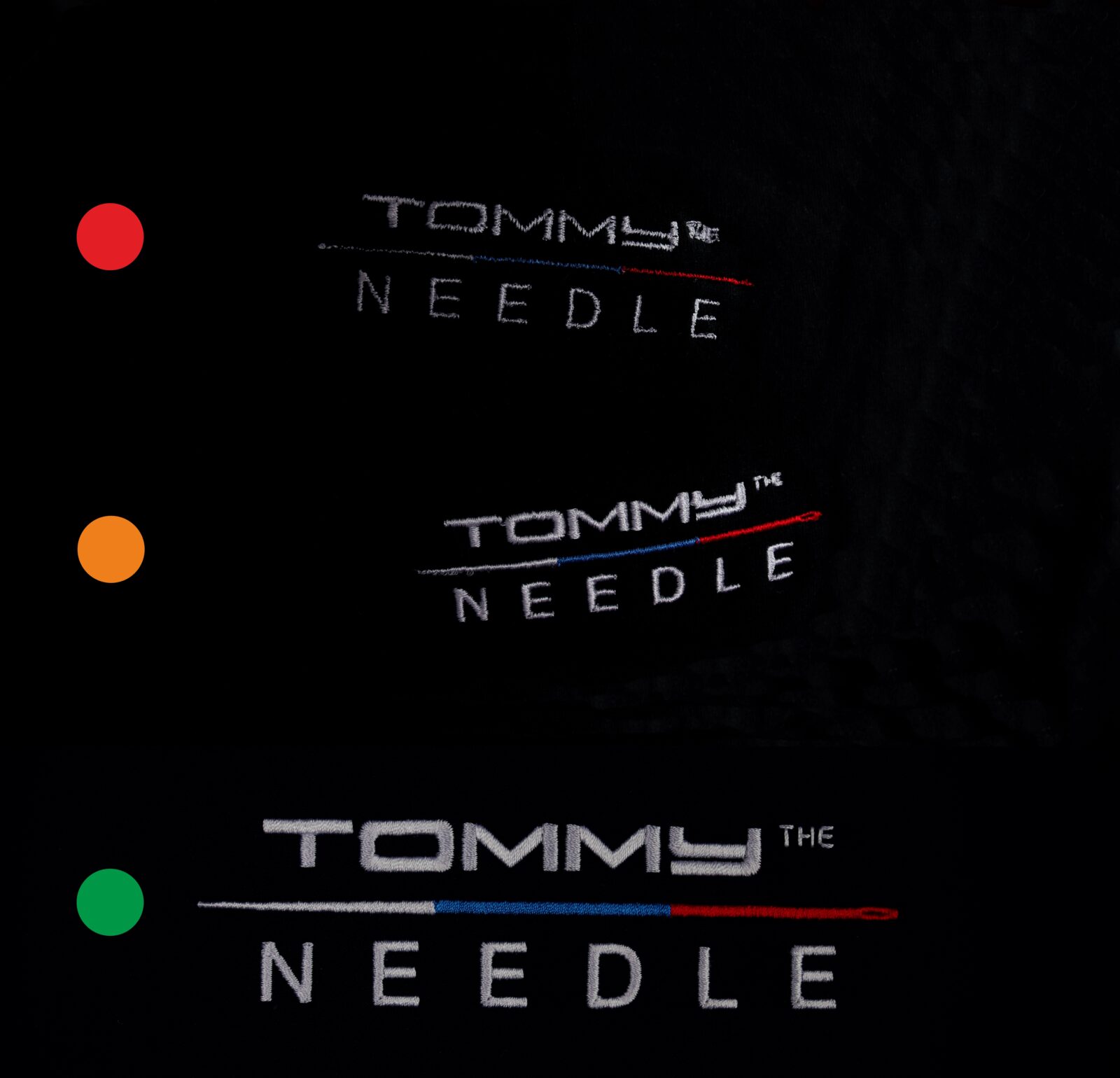
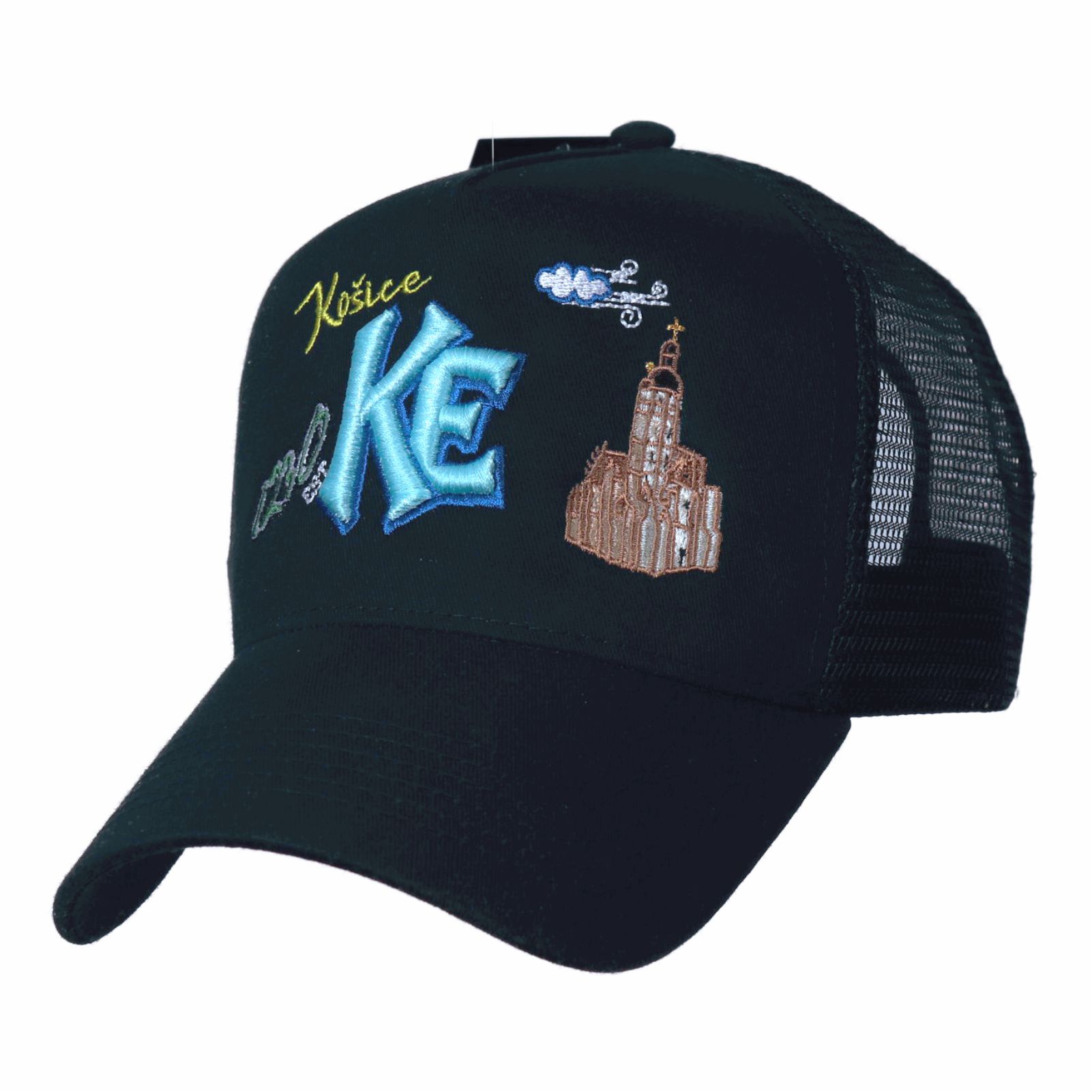
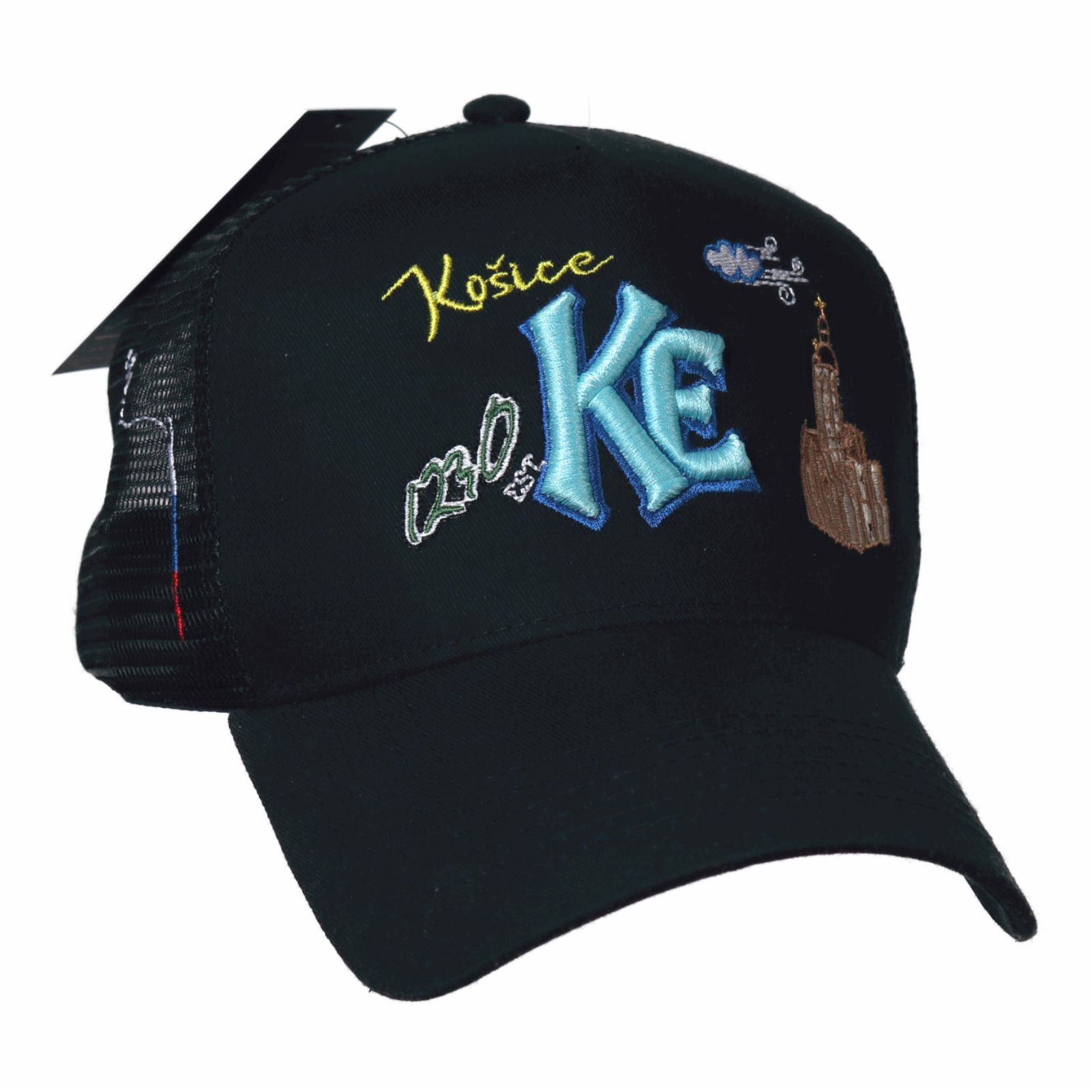
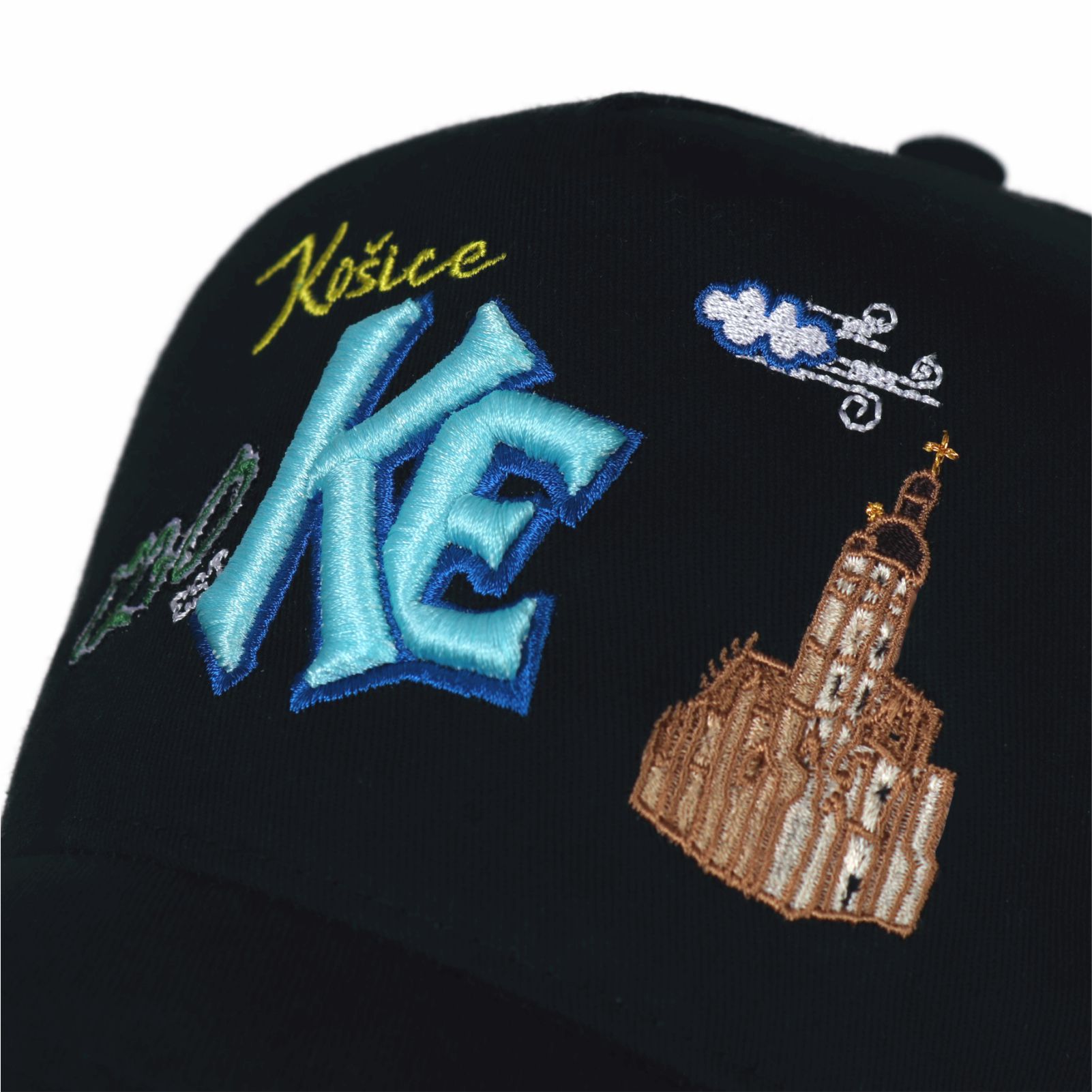
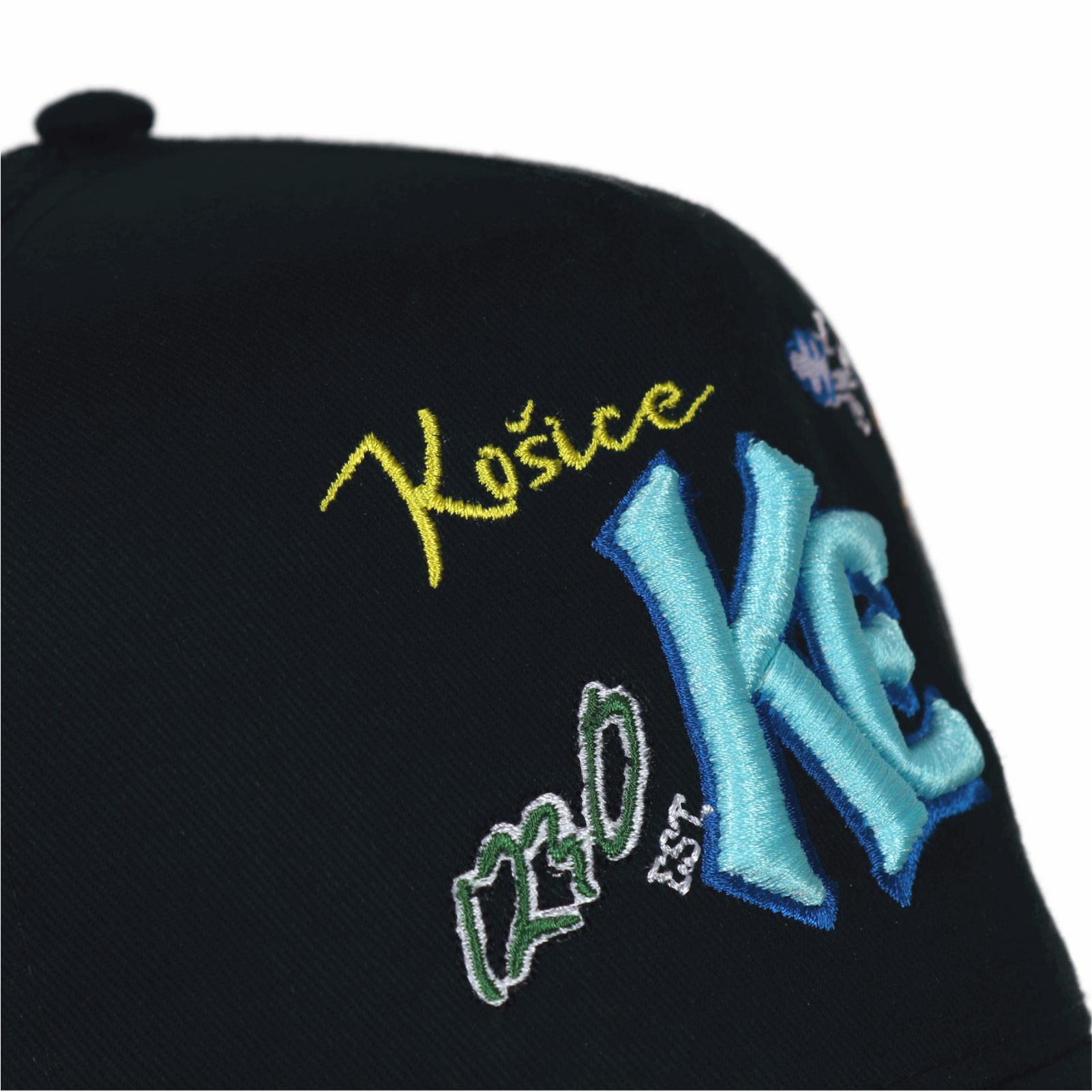
In the photo below, you can see a comparison of the quality of the embroidery.


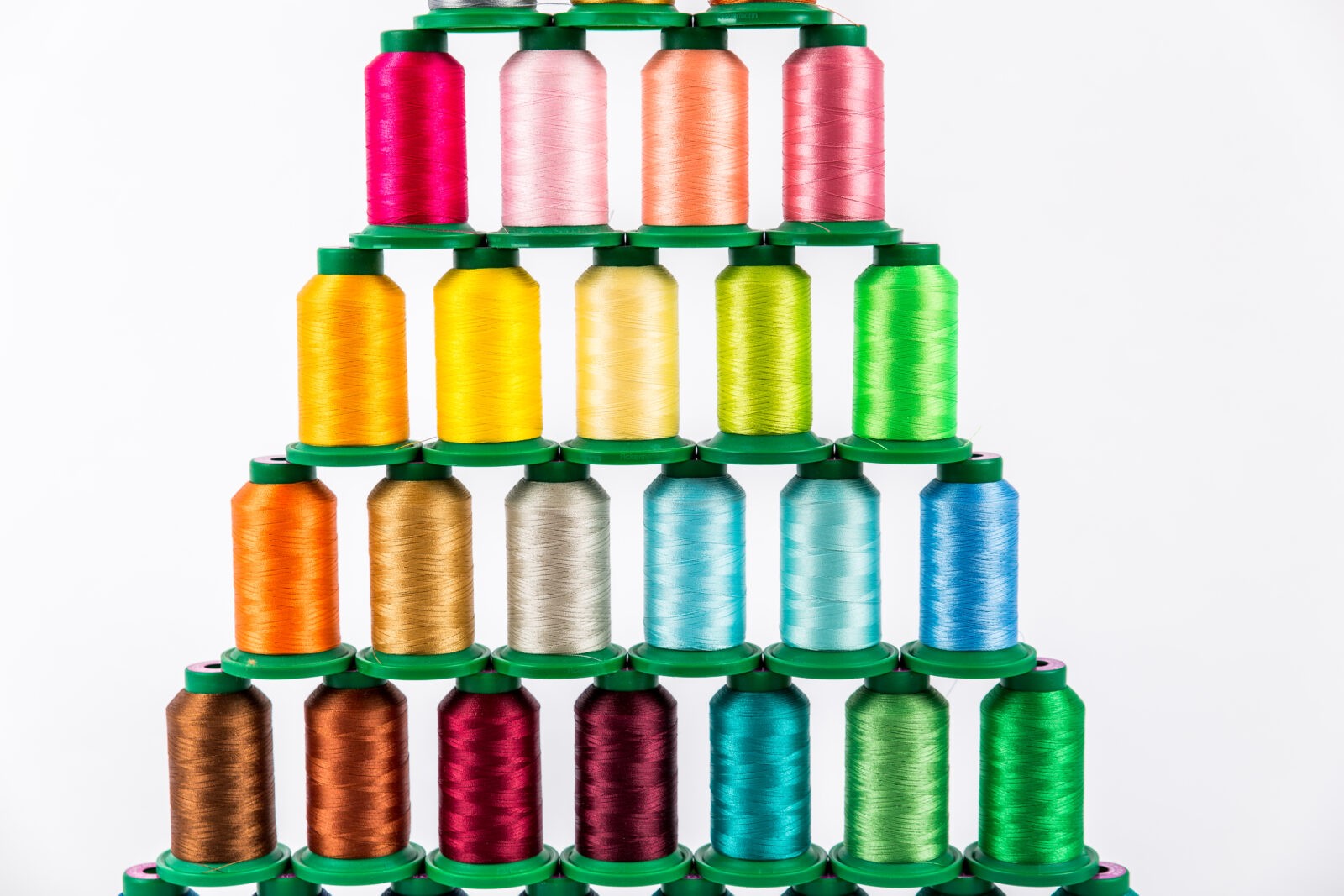
Threads
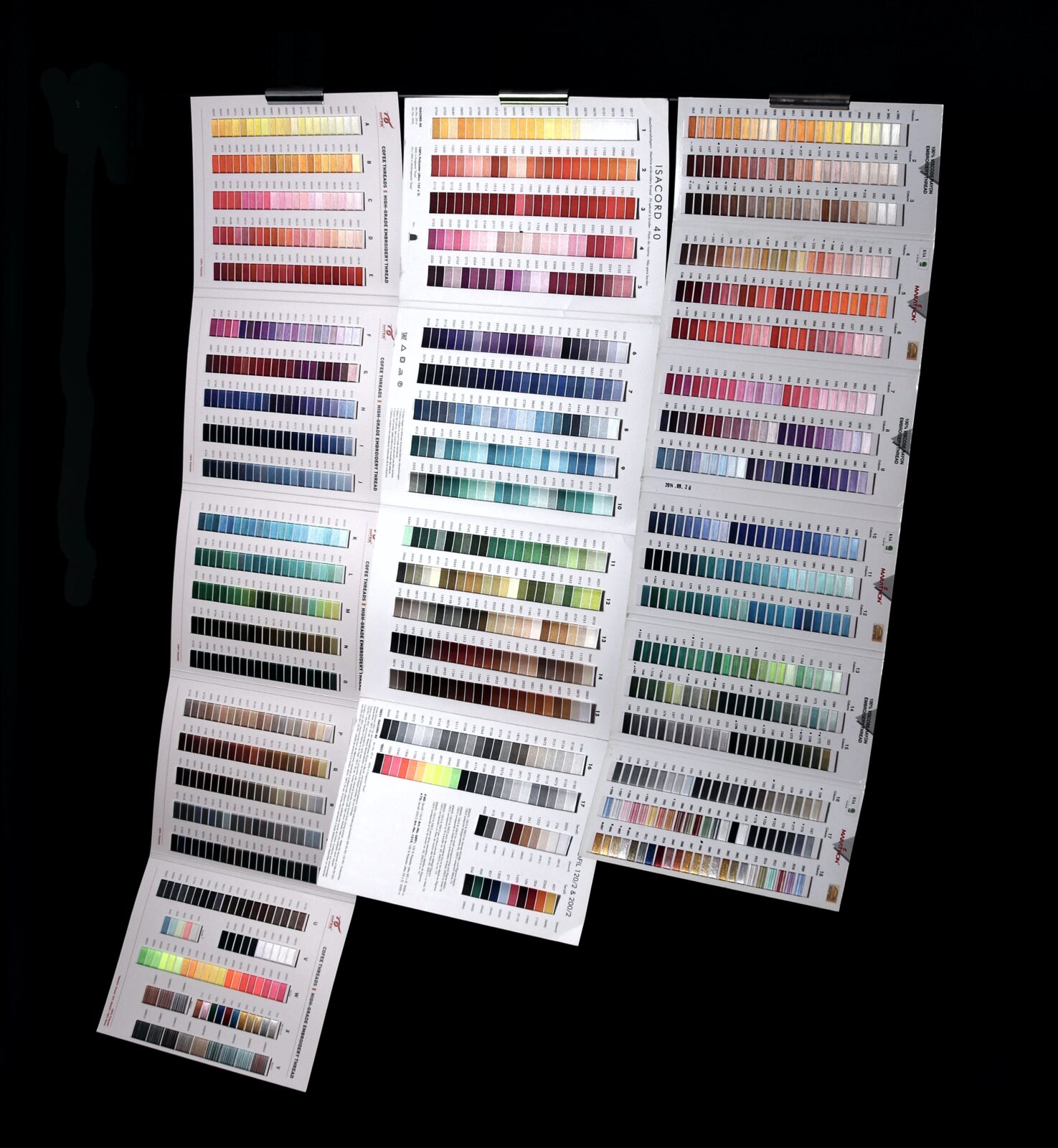
We use only high-quality (brand-name) threads that are tear-resistant and retain their color even after frequent washing.
Types of embroidery threads:
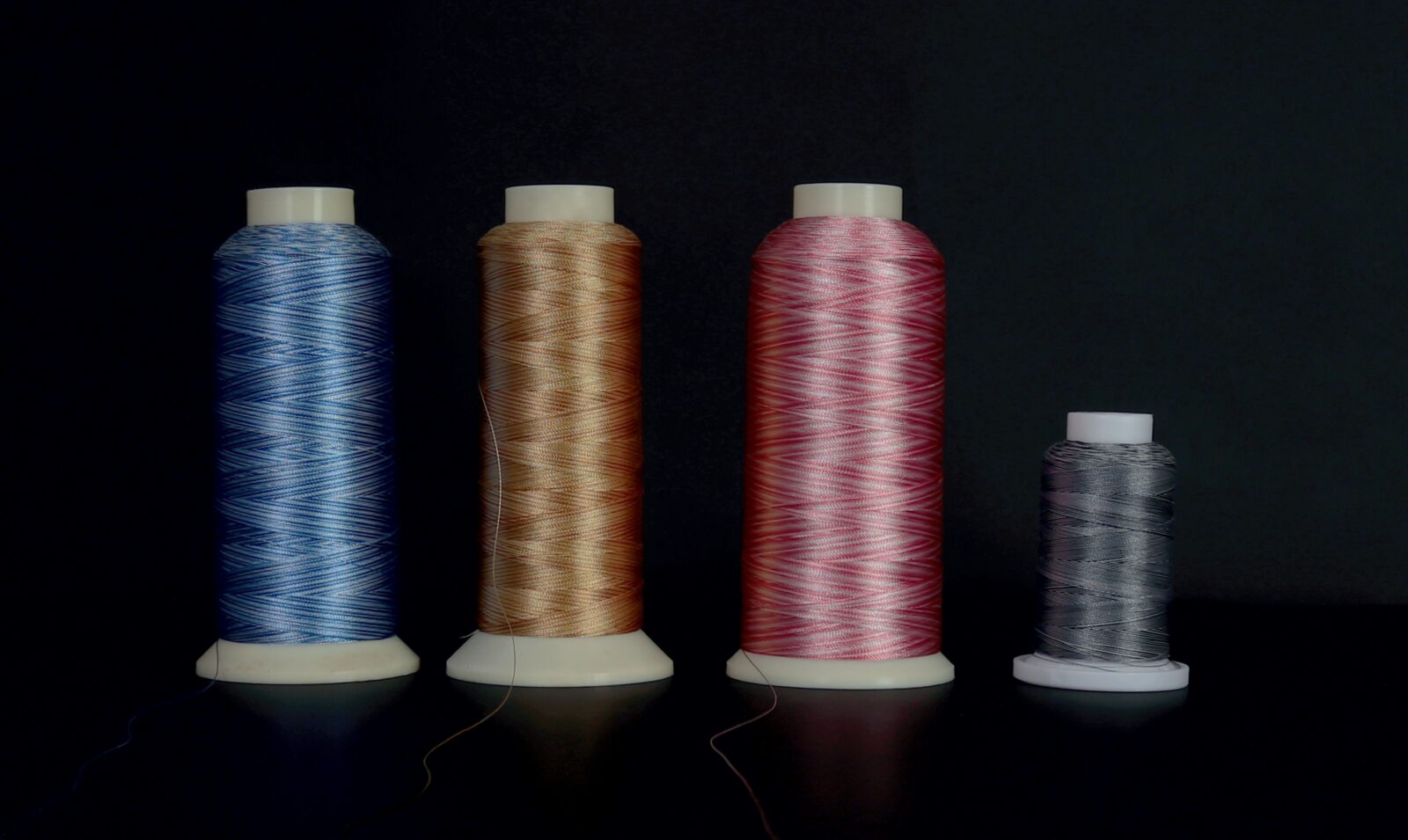
1. Viscose threads —these are the most commonly used high-quality threads
2. Polyester threads —very strong threads that are resistant to harsh detergents (shiny appearance)
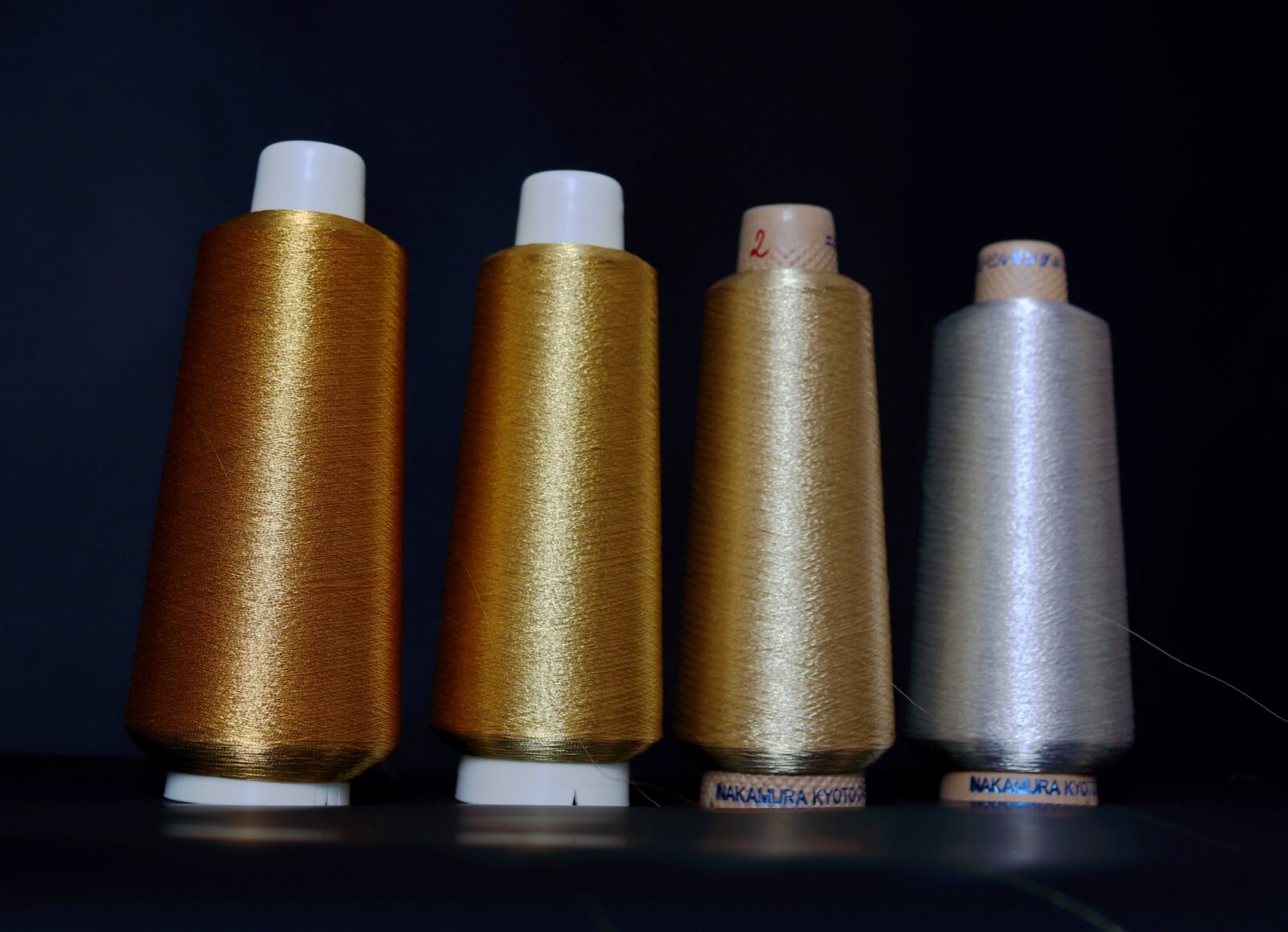
3. Metallic threads —most commonly used in gold and silver embroidery (for a shiny appearance)
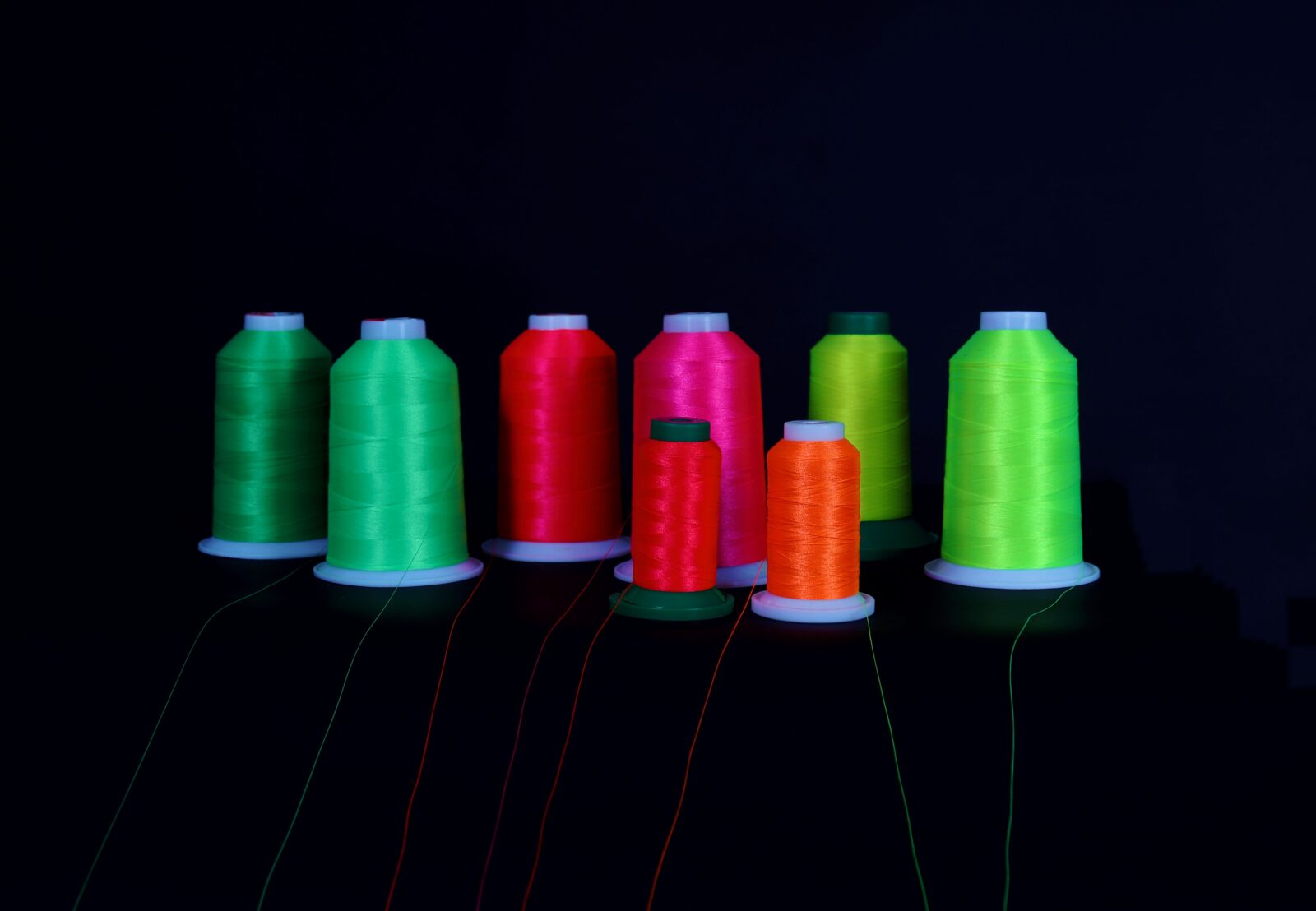
4. Neon threads —100% polyester threads in bold, bright colors
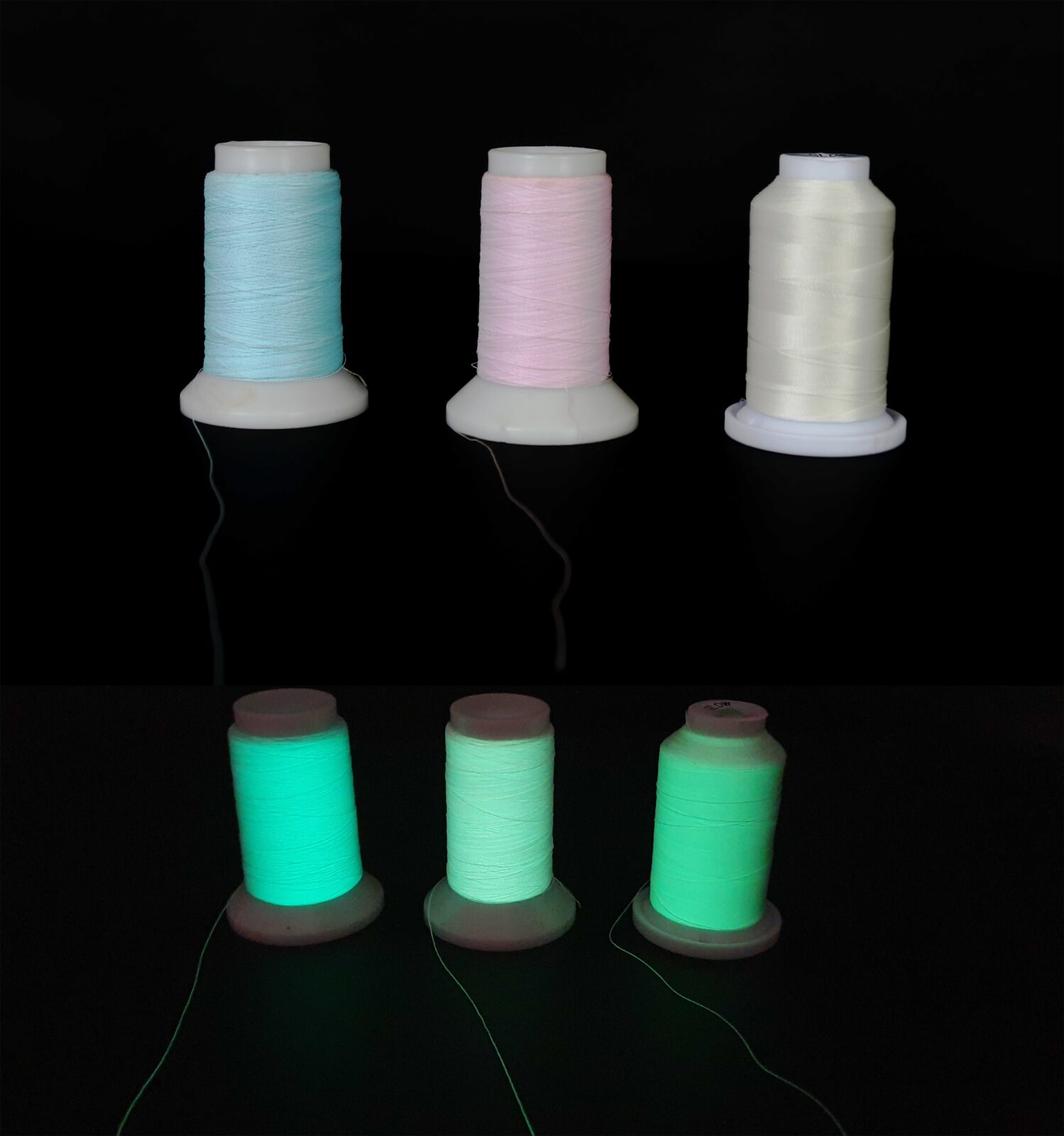
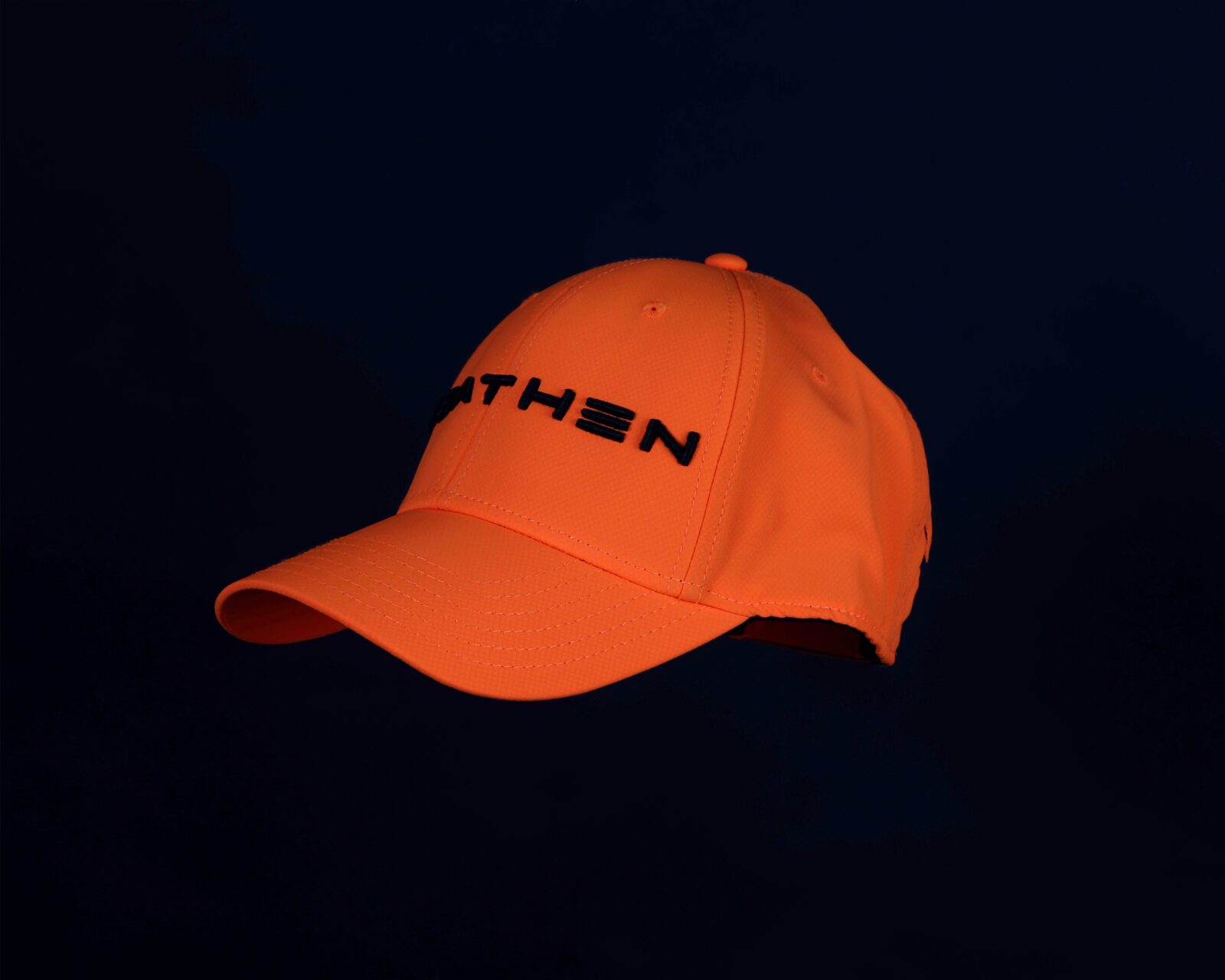
5. “Glow” thread —100% polyester thread that glows in the dark
6. “Ombré” threads —these are multicolored threads that can be 100% viscose or 100% polyester
7. Flame-retardant threads —there are also flame-retardant threads that are used for embroidering flame-retardant coveralls or work clothes
8. Reflective threads —special threads that reflect incoming light, thereby increasing visibility. They are used primarily in workwear, sportswear, and safety clothing.
Embroidery
The embroidery is stitched directly onto the final product (T-shirt, sweatshirt, cap, etc.). A backing material (interlining) is applied to the underside to maintain the shape of the embroidery and protect (reinforce) the stitched area of the fabric. For materials such as fleece or terry cloth, a water-soluble film is applied to the top side to prevent the embroidery stitches from sinking beneath the fabric fibers and to keep the fabric fibers from penetrating between the embroidery stitches.
Advantages of embroidery:
1. An elegant appearance and a professional impression
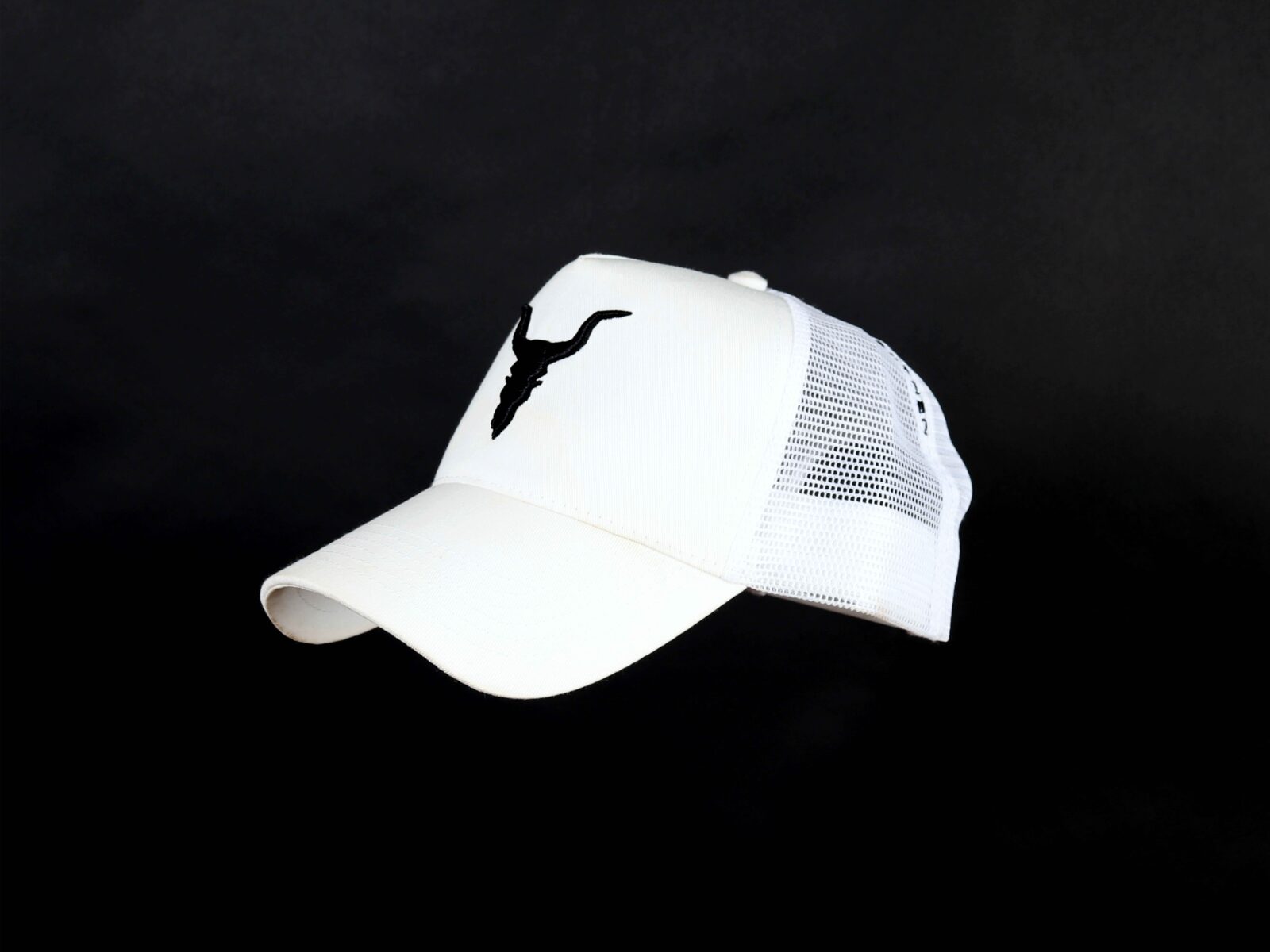
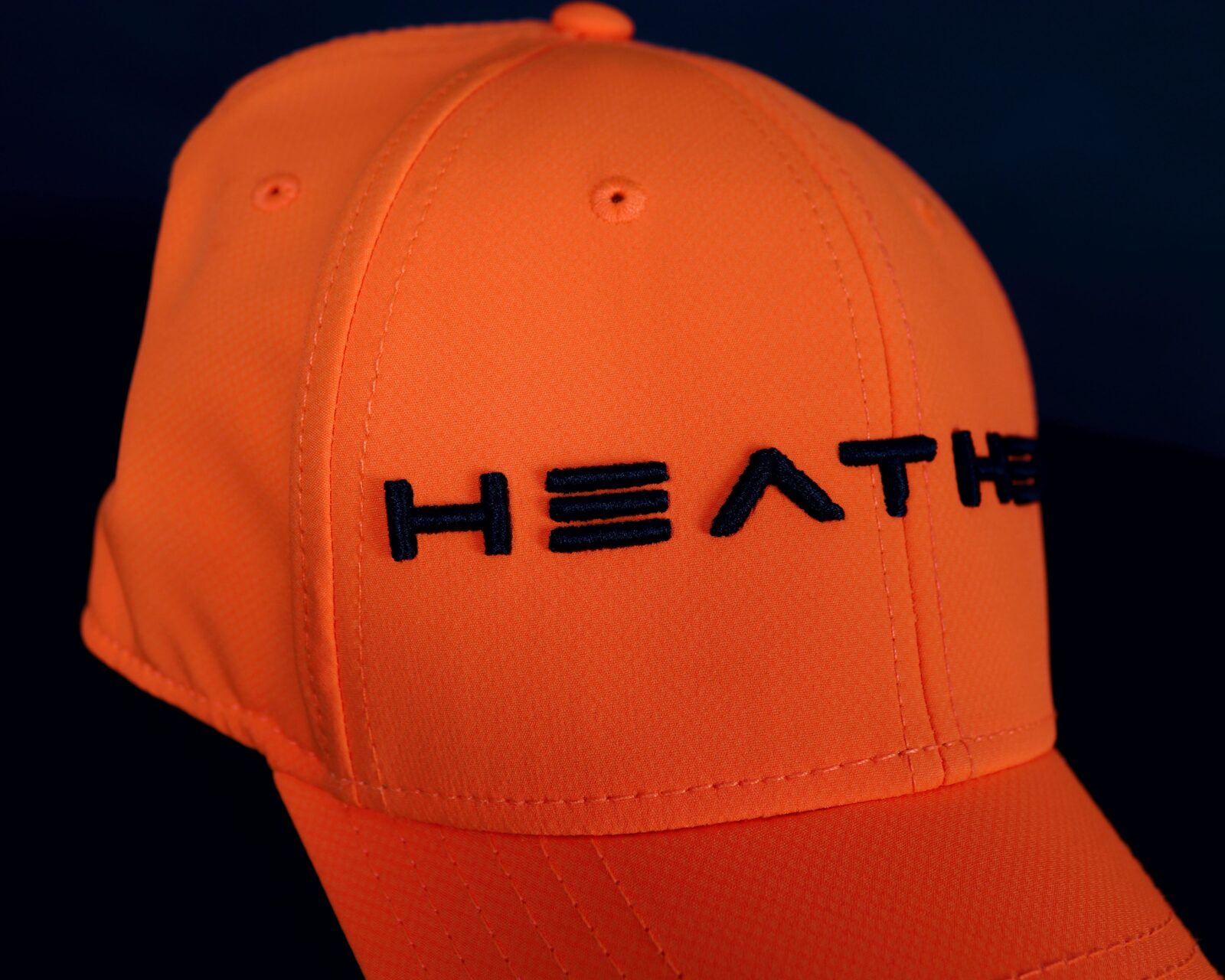
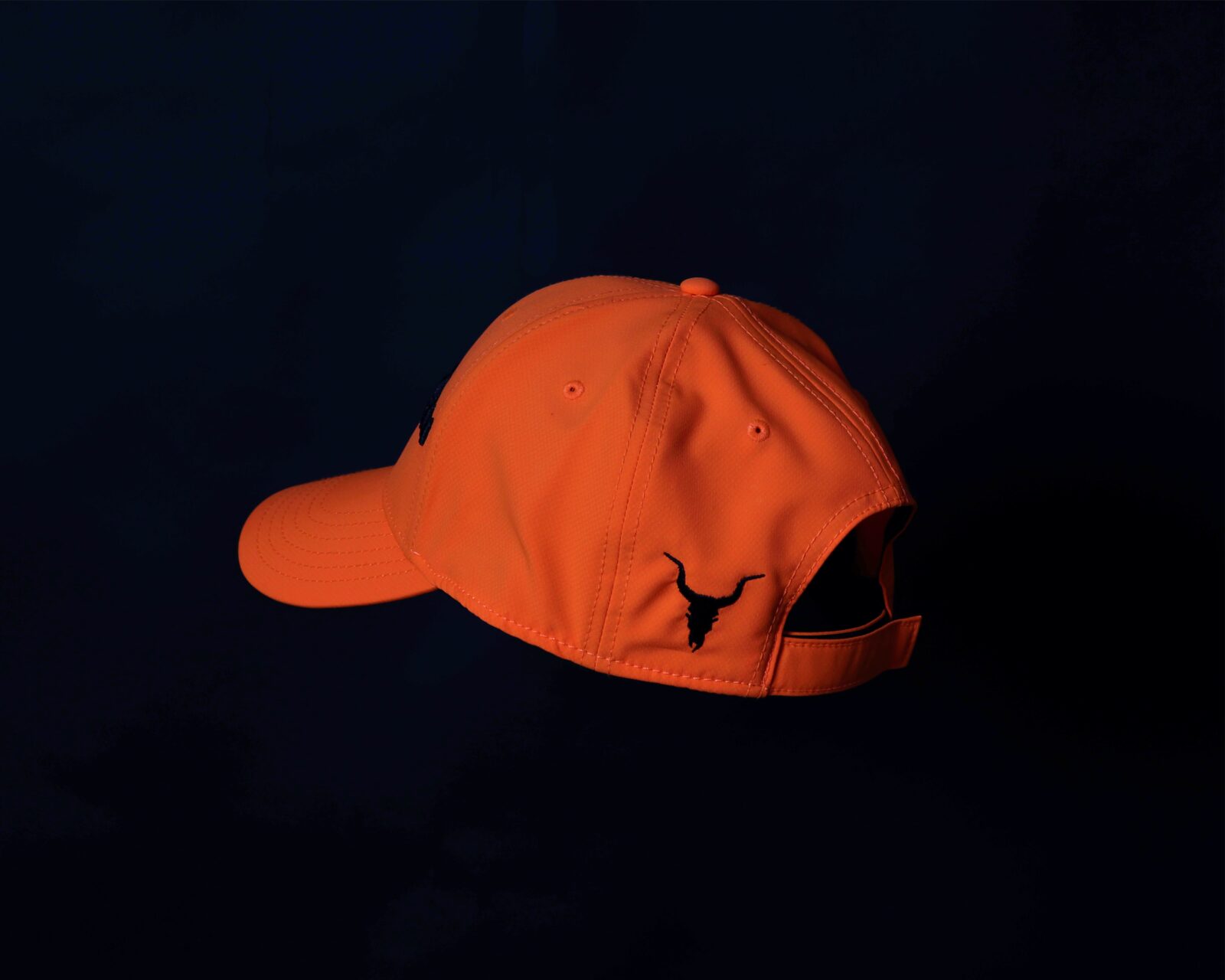
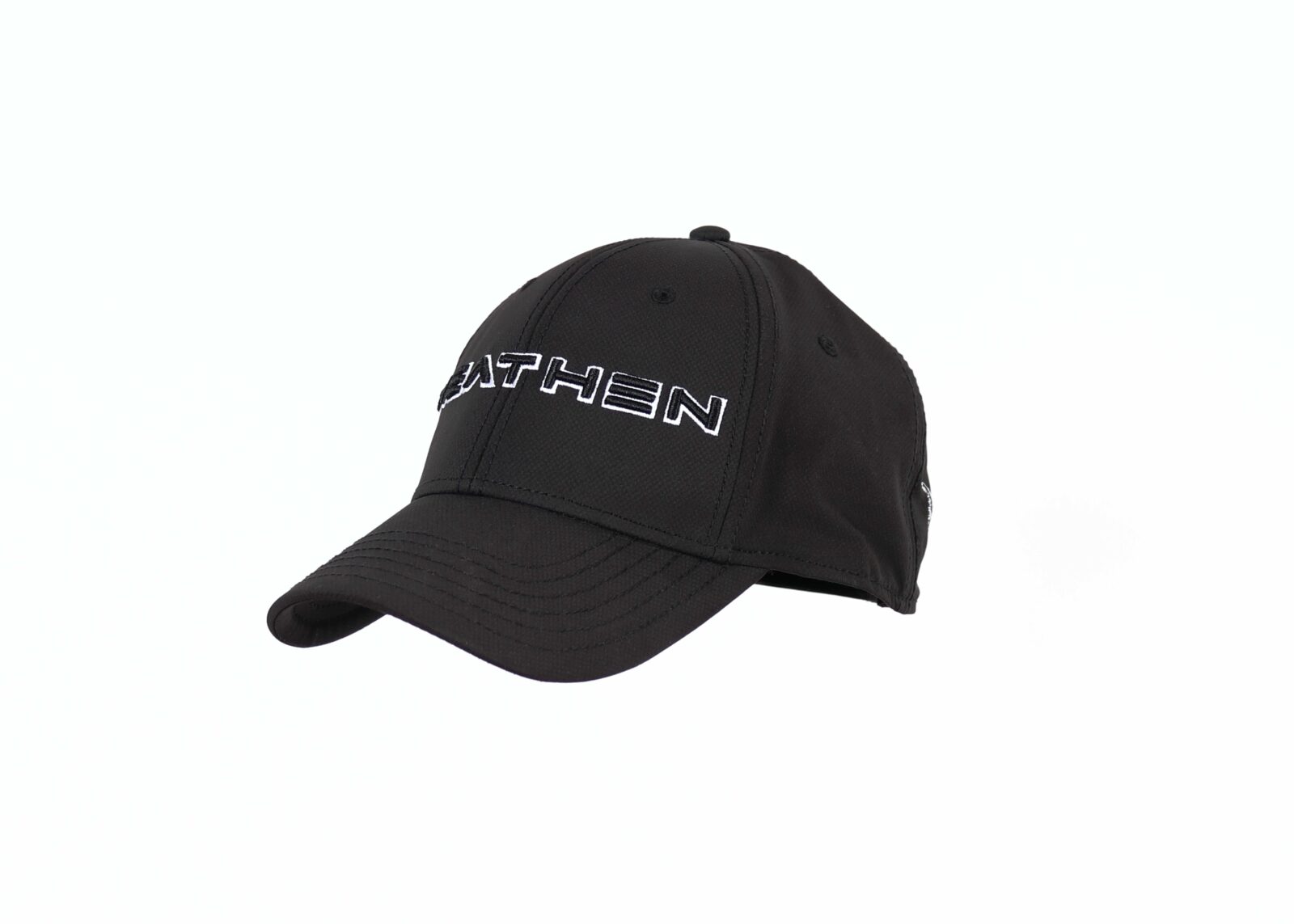
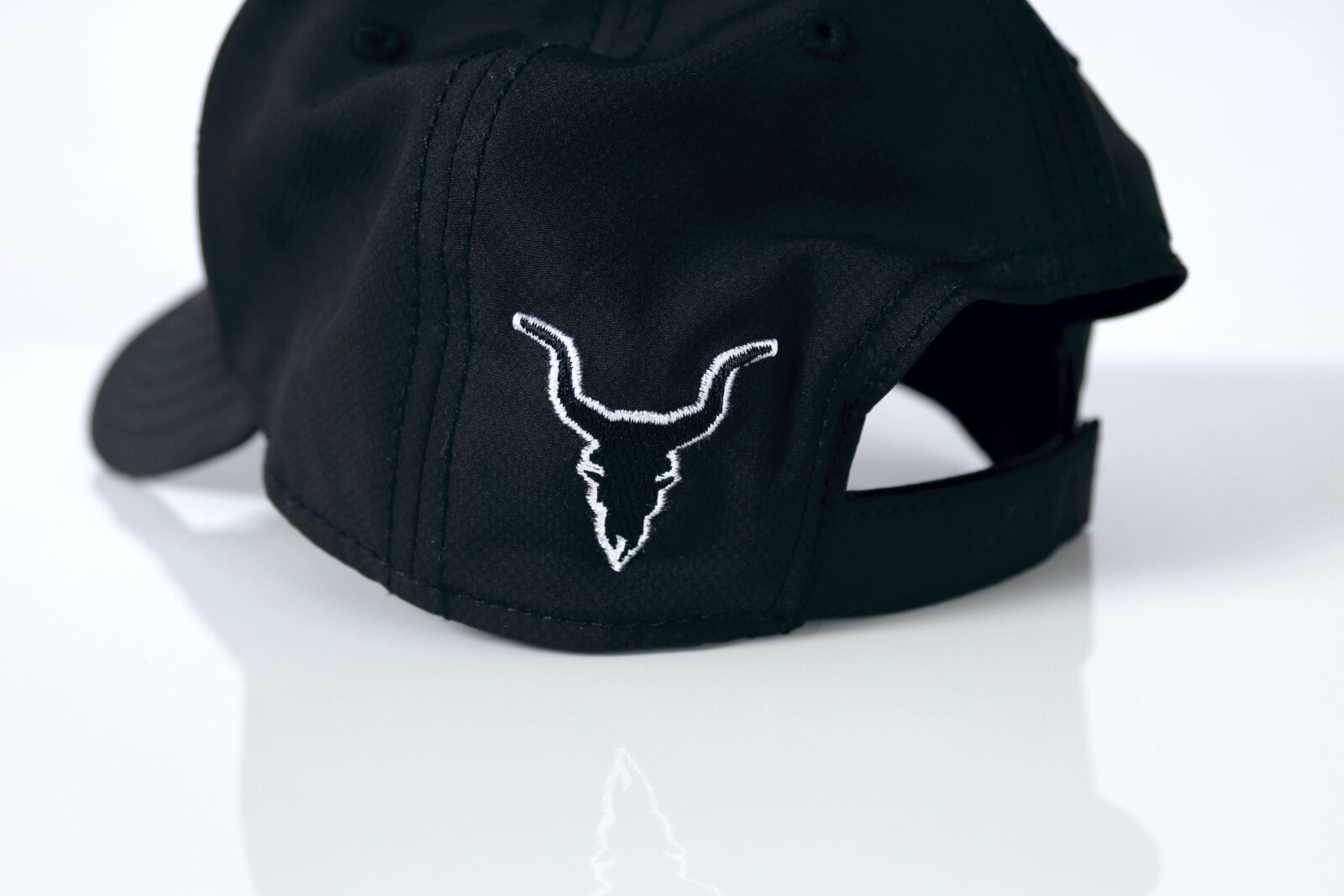
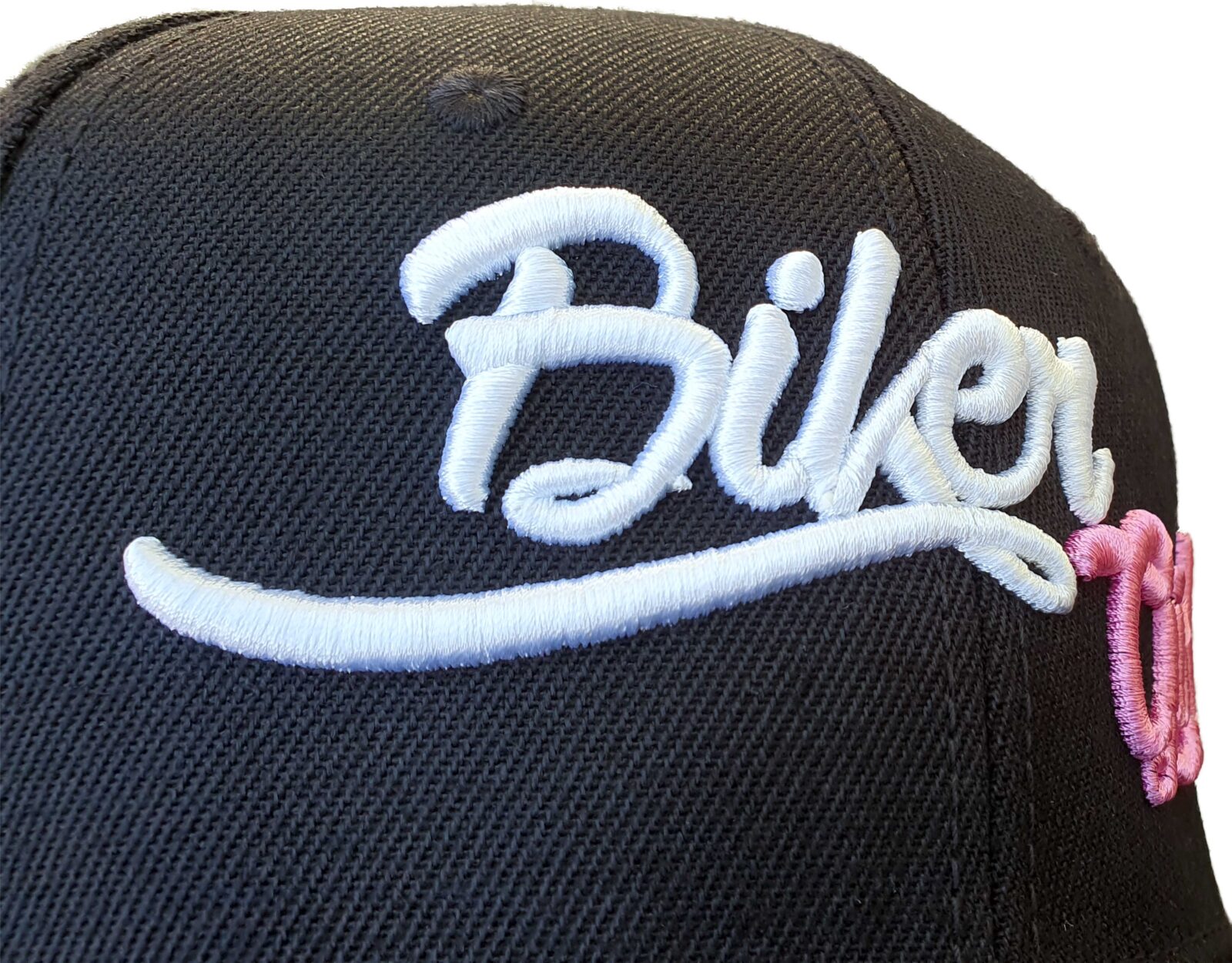
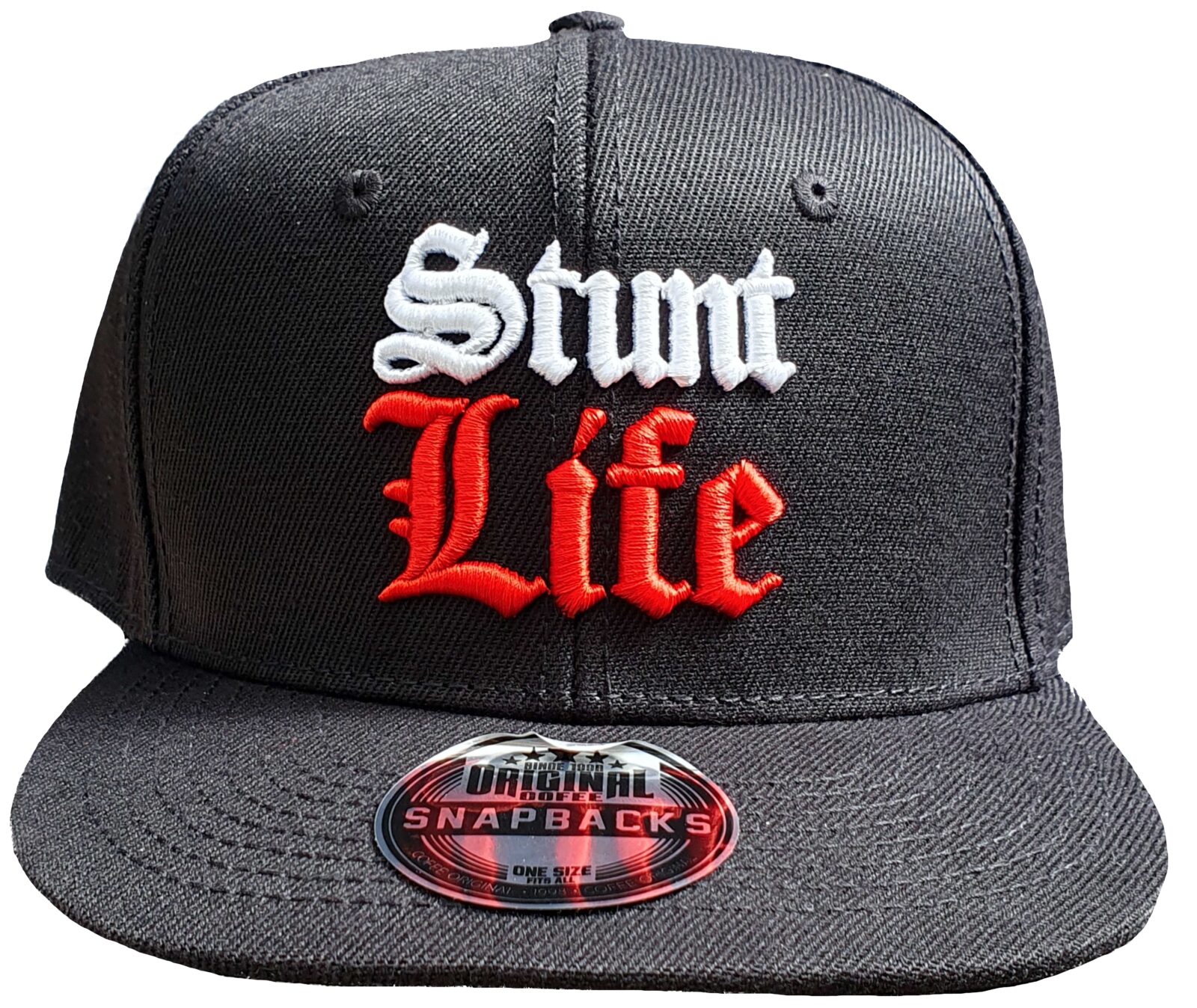
2. Option to use a 3D effect—special (puff) foam is inserted beneath the stitches, creating a striking three-dimensional effect. This type of embroidery is particularly popular on baseball caps and certain types of logos. However, it is not suitable for all designs.
3. Application method—this method combines fabric and embroidery. The fabric is sewn onto the product, then trimmed and edged with a satin stitch. This method is particularly suitable for larger embroidery designs with a solid background (the background will not be embroidered but will be formed by the sewn-on fabric, which significantly reduces the number of stitches).
3. Ironing instructions (it is best to cover the embroidery with a piece of fabric or to iron from the back)
4. Long-lasting and resistant to frequent washing (the threads do not bleed)
5. You can embroider on all types of fabric (fleece, denim, leather, mesh, satin, terry cloth, stretch fabric, etc.)











Patches
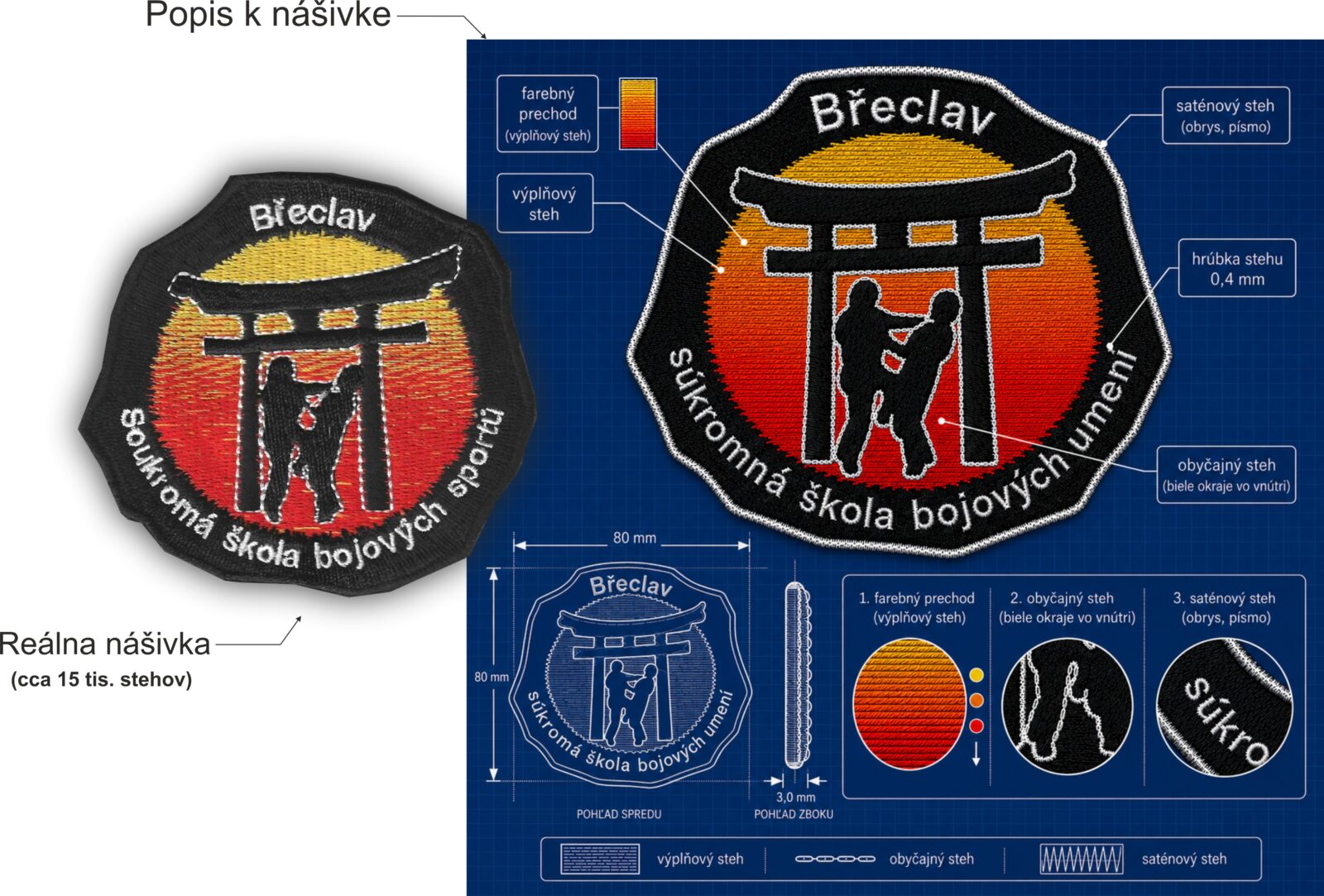
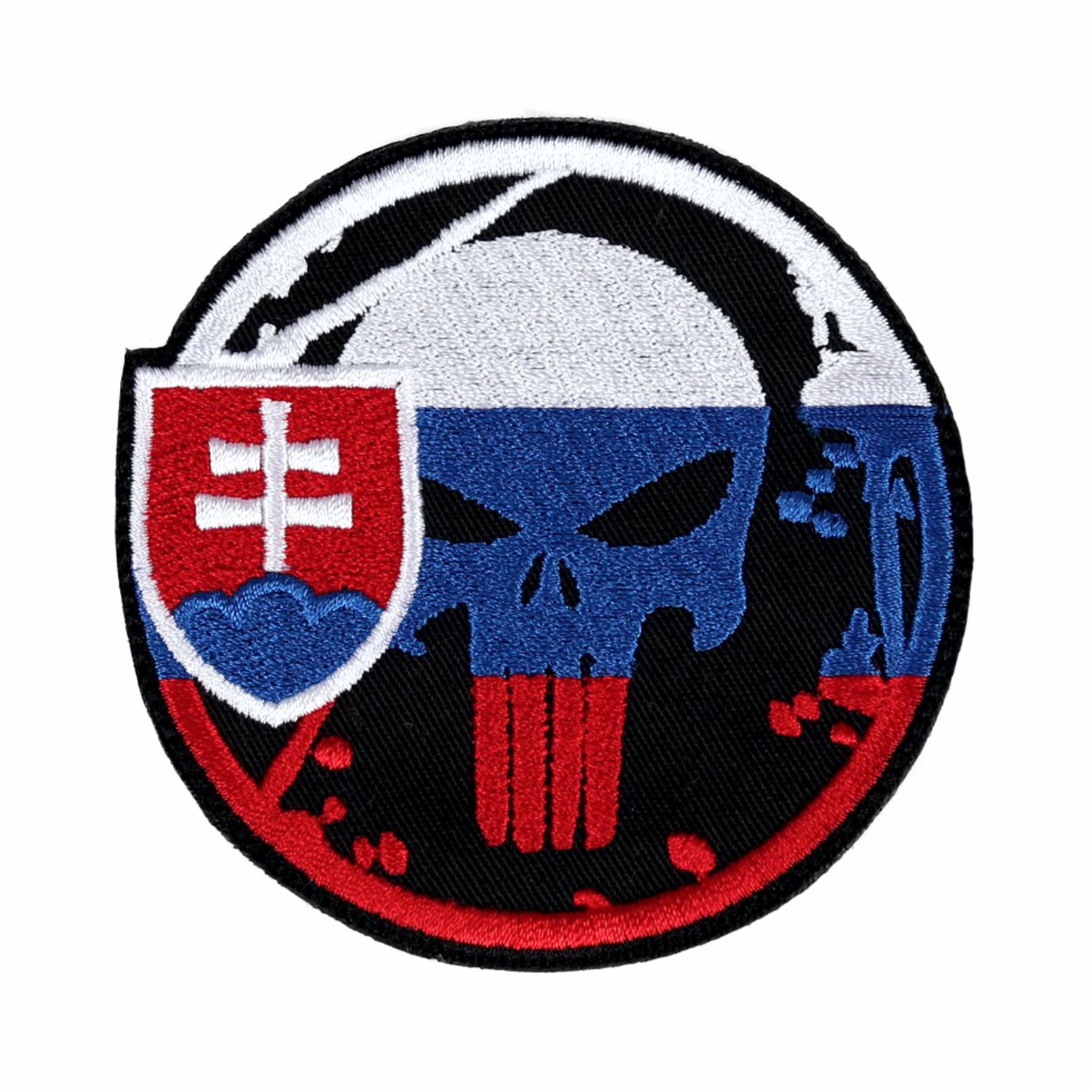
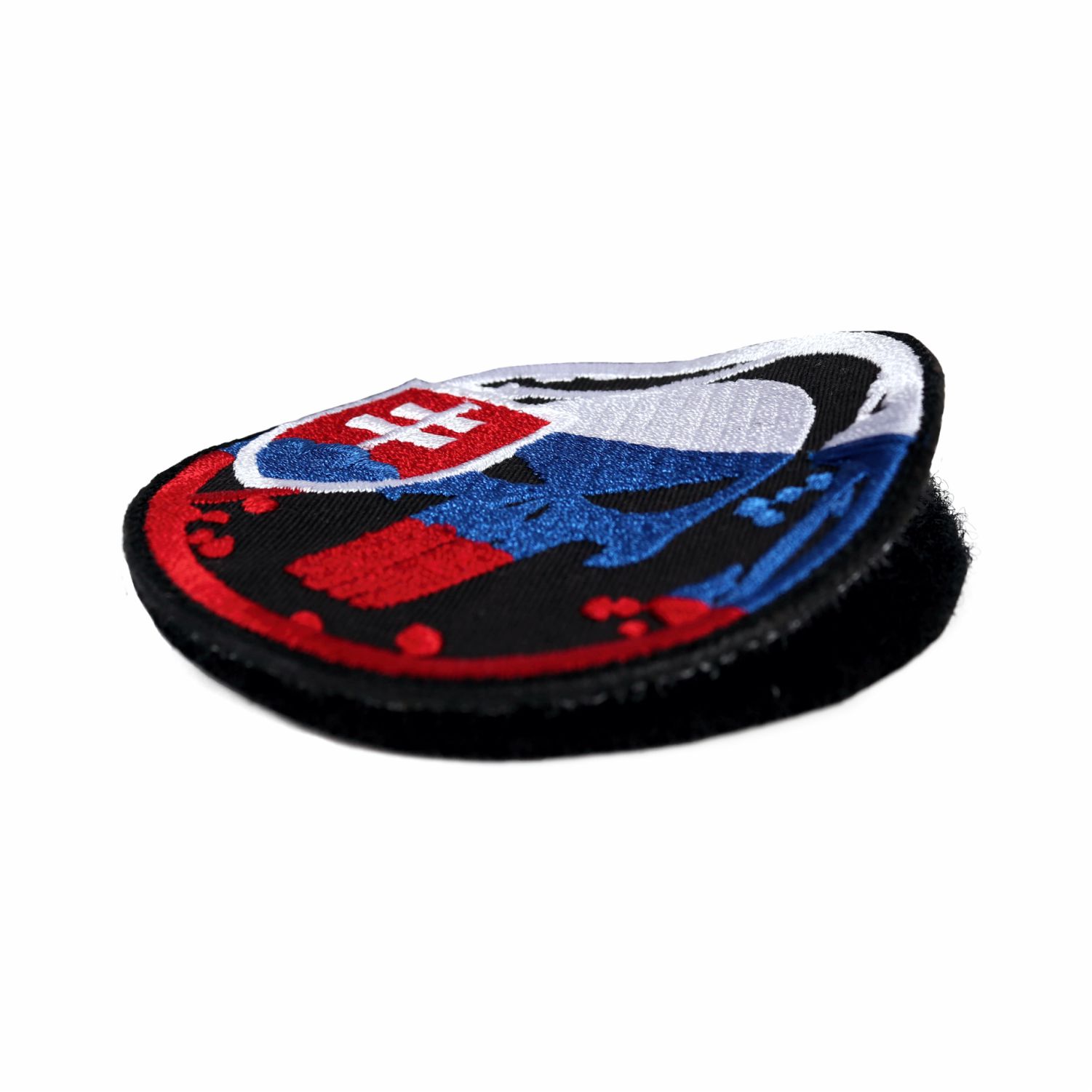
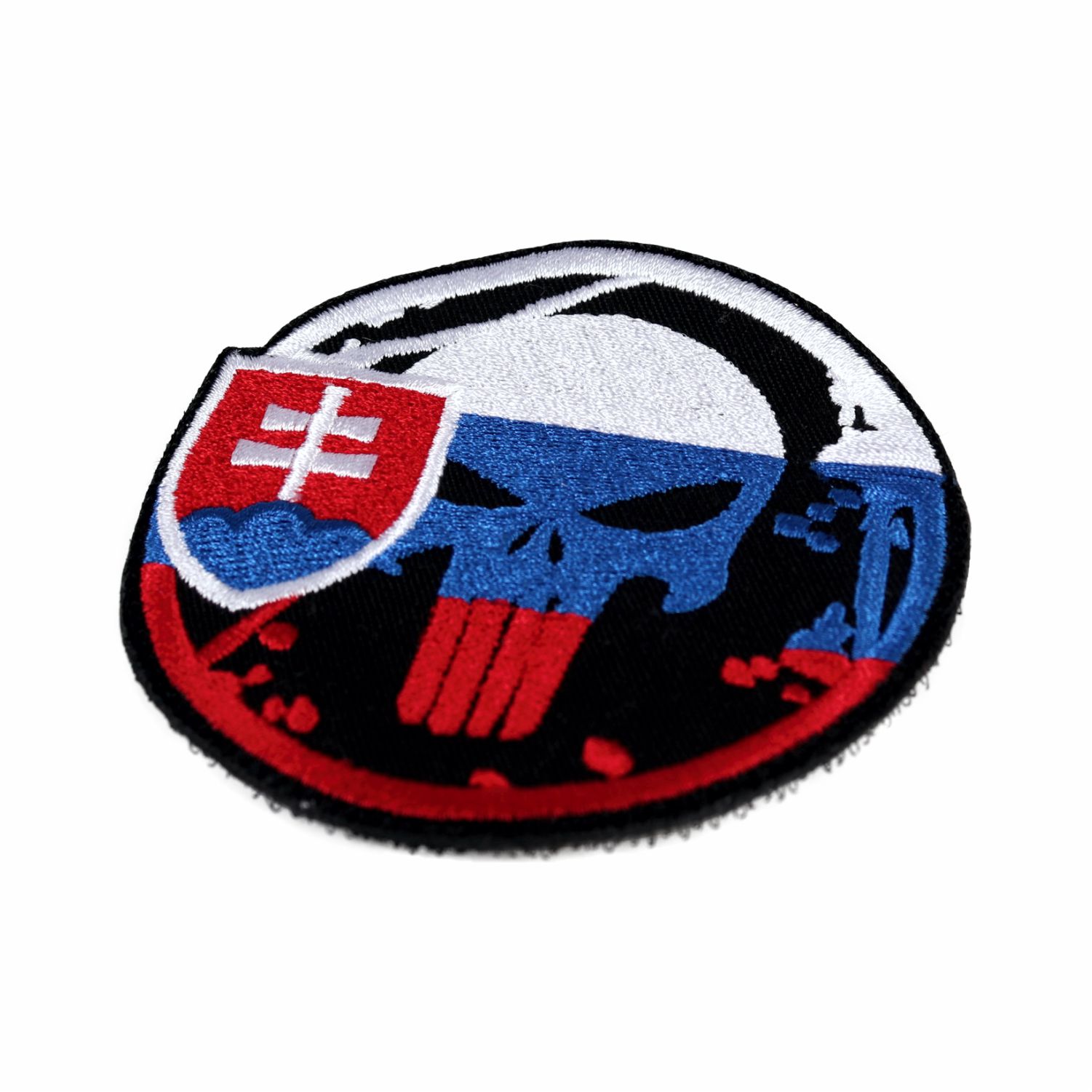
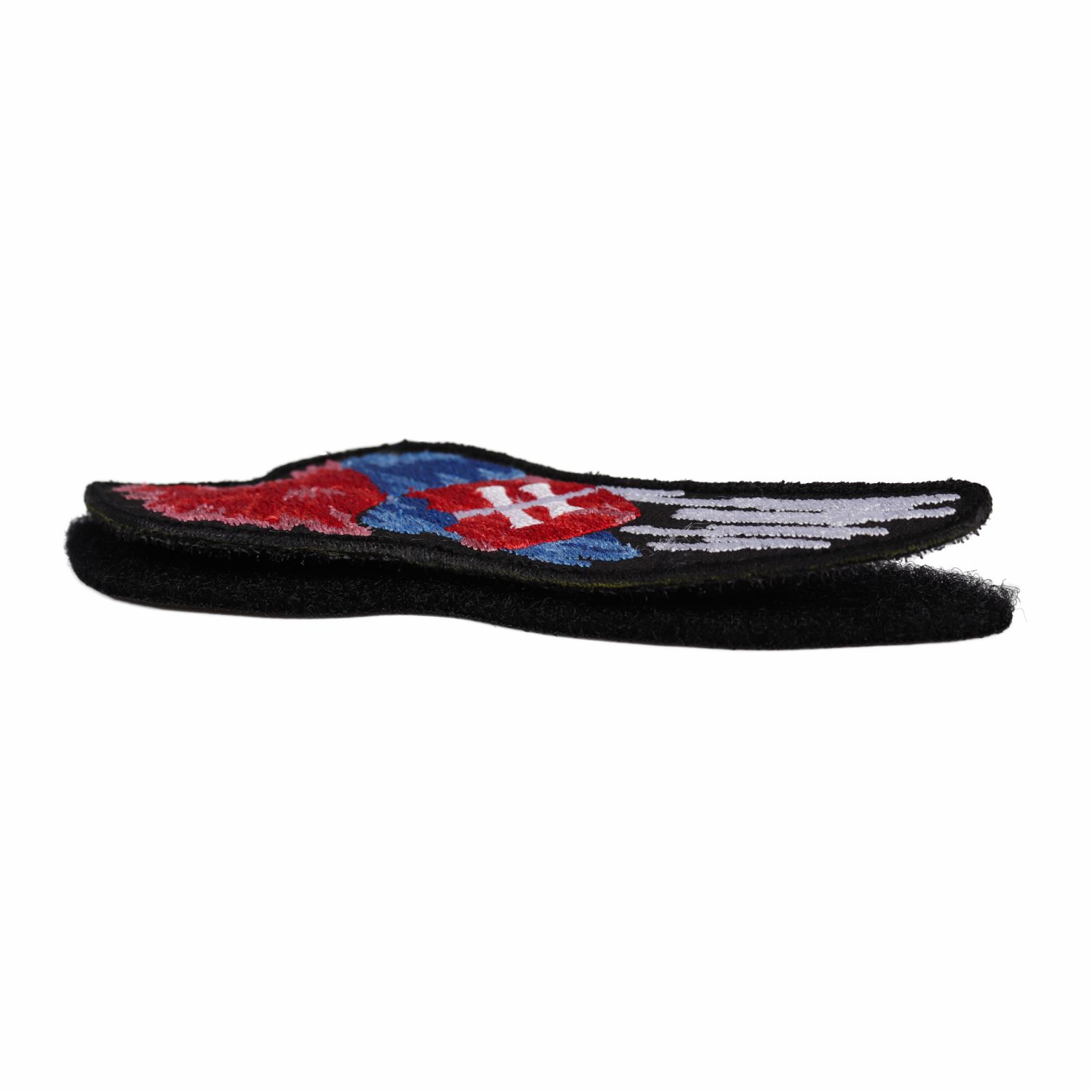
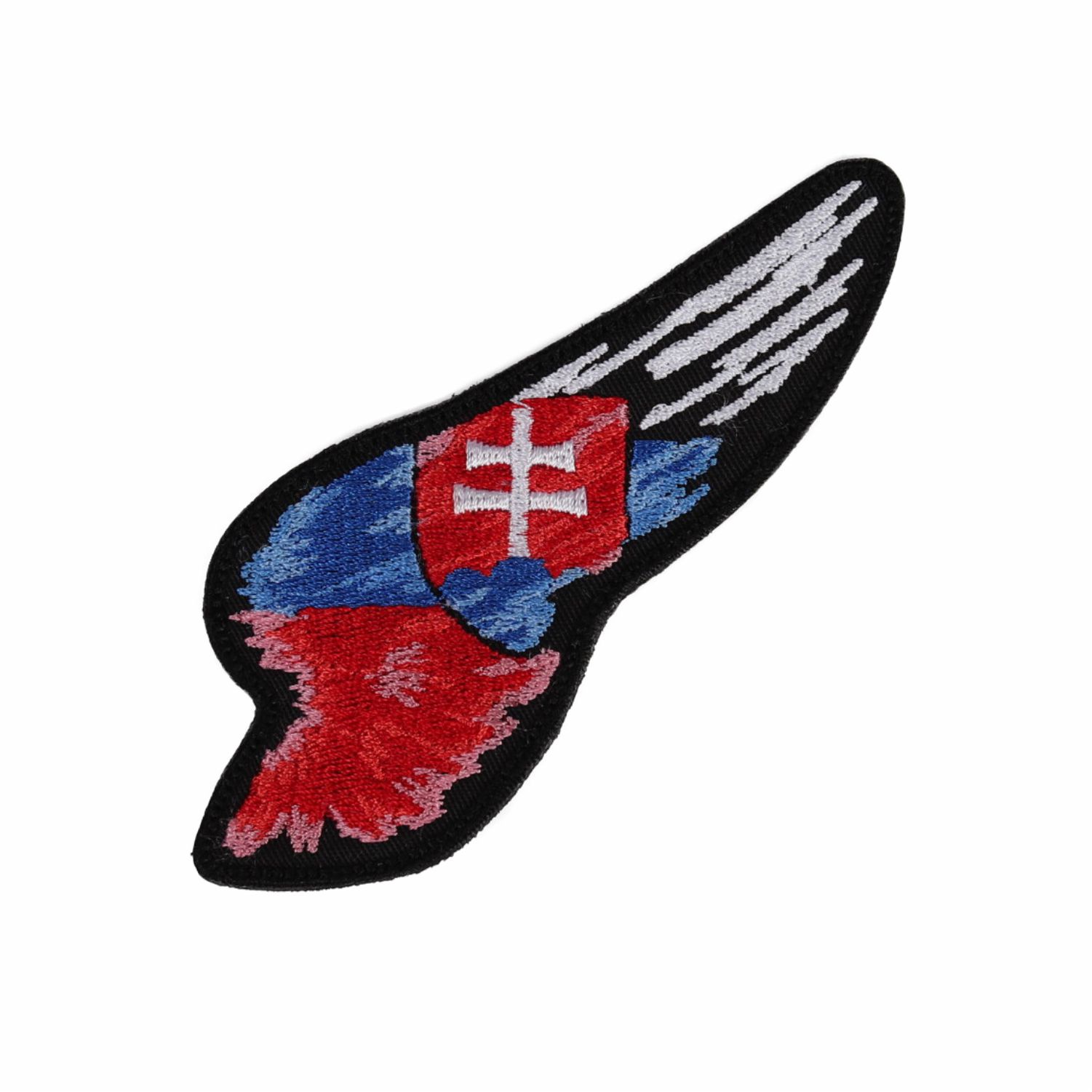
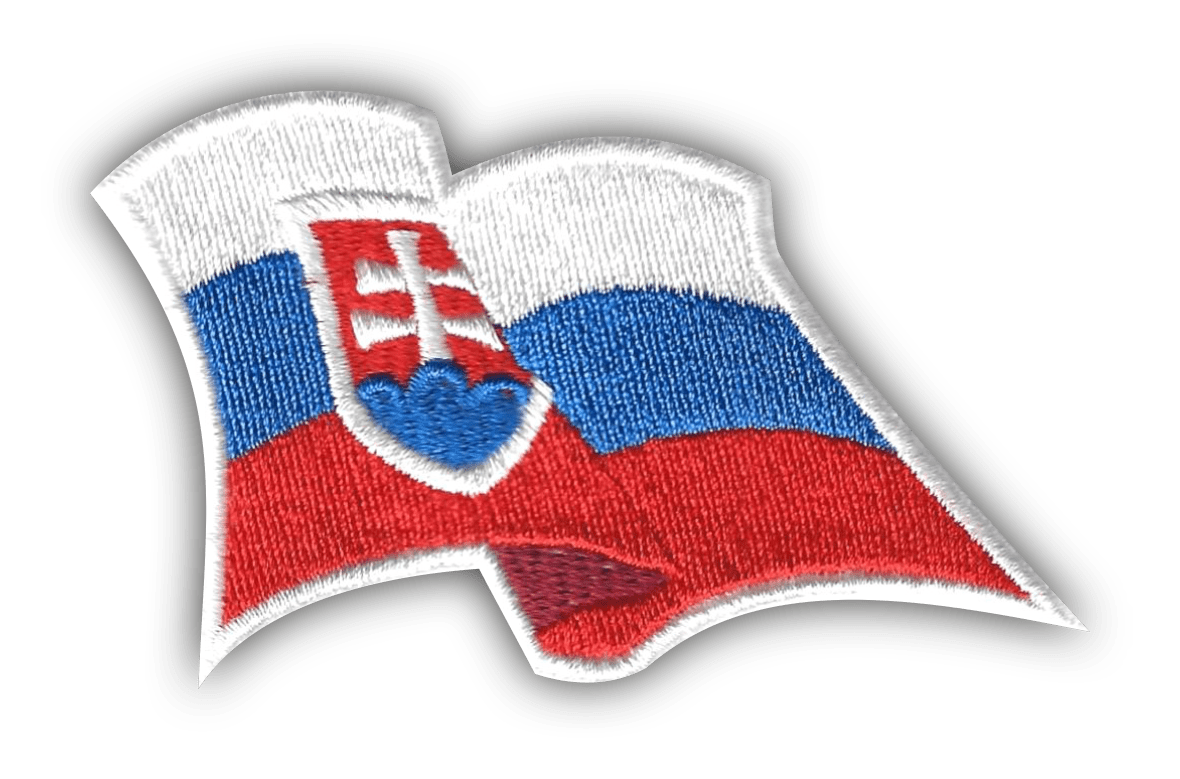
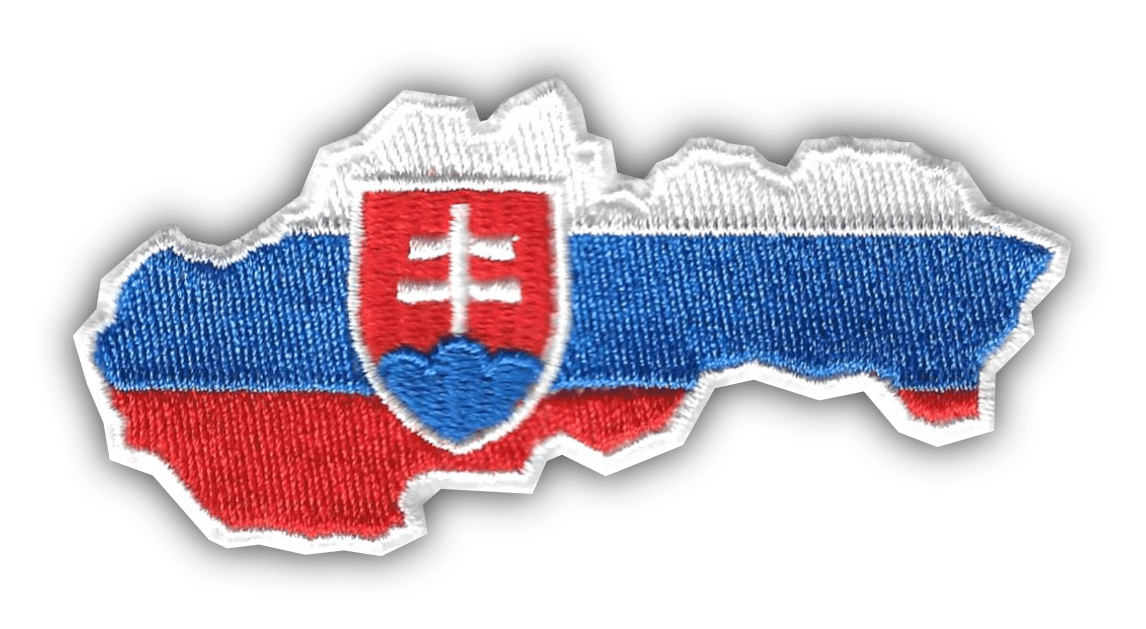
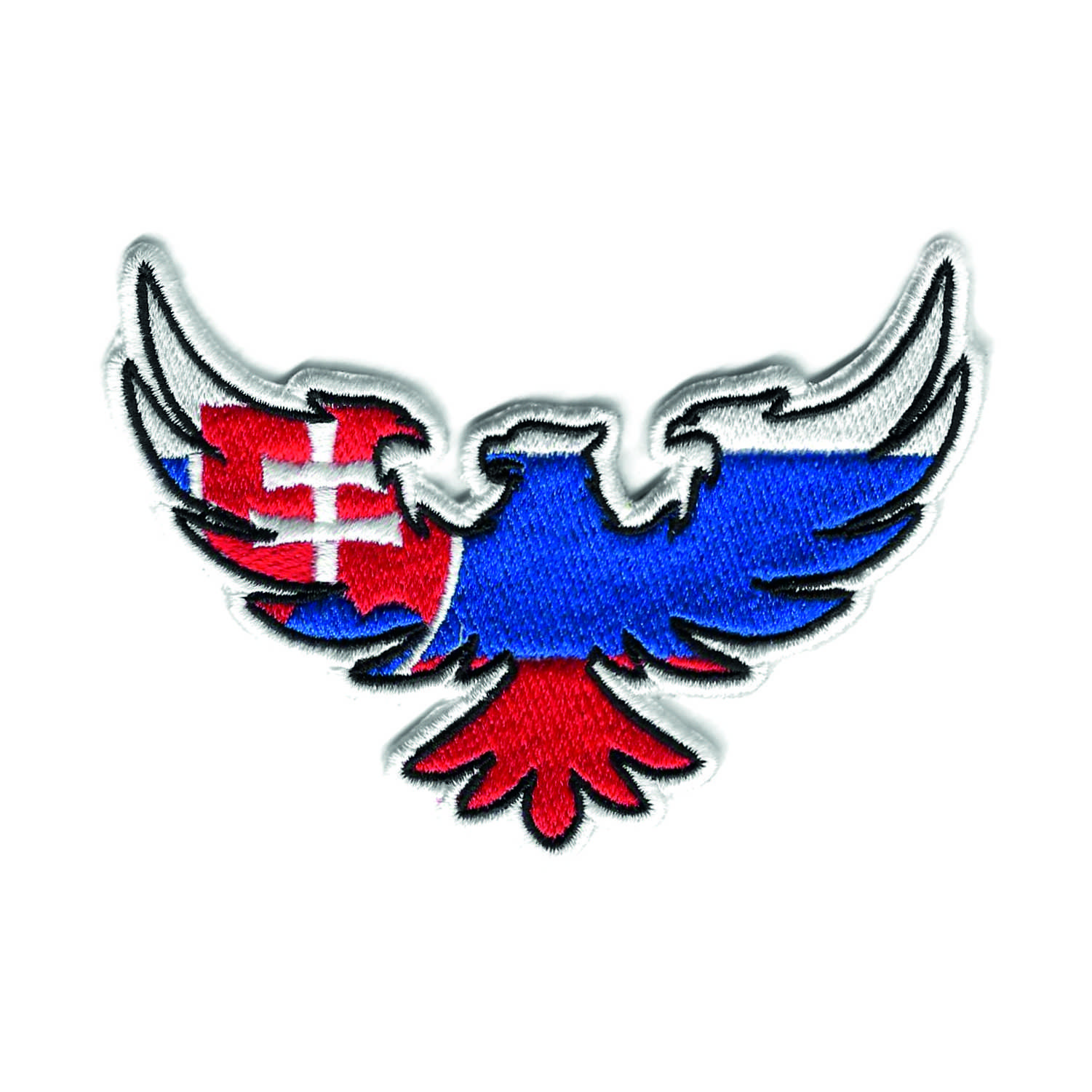
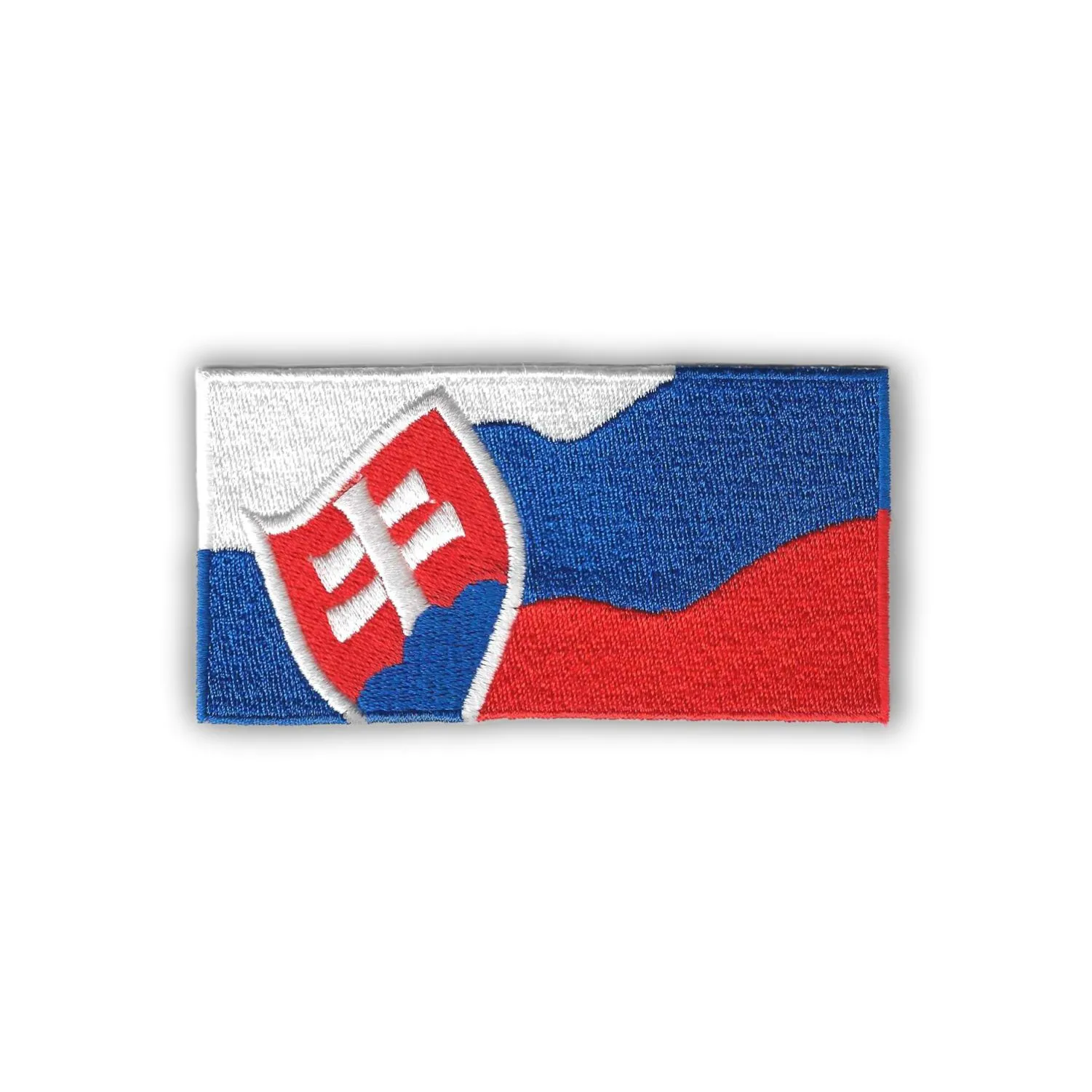
The patch is embroidered onto a separate piece of fabric (65% polyester / 35% cotton) or felt, from which it is then cut out and sewn onto the product (with the option of attaching Velcro or applying an iron-on transfer). Another advantage is the ability to produce larger quantities for stock without having to purchase fabric. It is also possible to unpick the patch from an old (damaged) product and sew it onto a new one.
Advantages of patches:
1. They can be removed from the old (damaged) product and sewn onto the new product
2. Option to sew on Velcro or apply iron-on transfer film
3. Very long-lasting and resistant to frequent washing
4. Producing larger quantities for inventory, without having to purchase fabric






Printing

Direct Screen Printing
Screen printing is the oldest and most effective form of direct textile printing. In direct screen printing, each color of the design is applied separately through a fine mesh screen directly onto the fabric. A separate stencil is prepared for each color, through which the ink is forced onto the fabric using a squeegee. After all colors have been applied, the print is heat-set in a drying machine to ensure it cures properly and achieves high resistance to washing and wear. This technology is particularly ideal for larger runs of the same design, as it offers high quality, long-lasting durability, and a cost-effective price per piece.
Advantages:
1. High print quality and speed.
2. Longest lifespan and color fastness compared to heat transfers.
3. Cost-effective for large quantities.
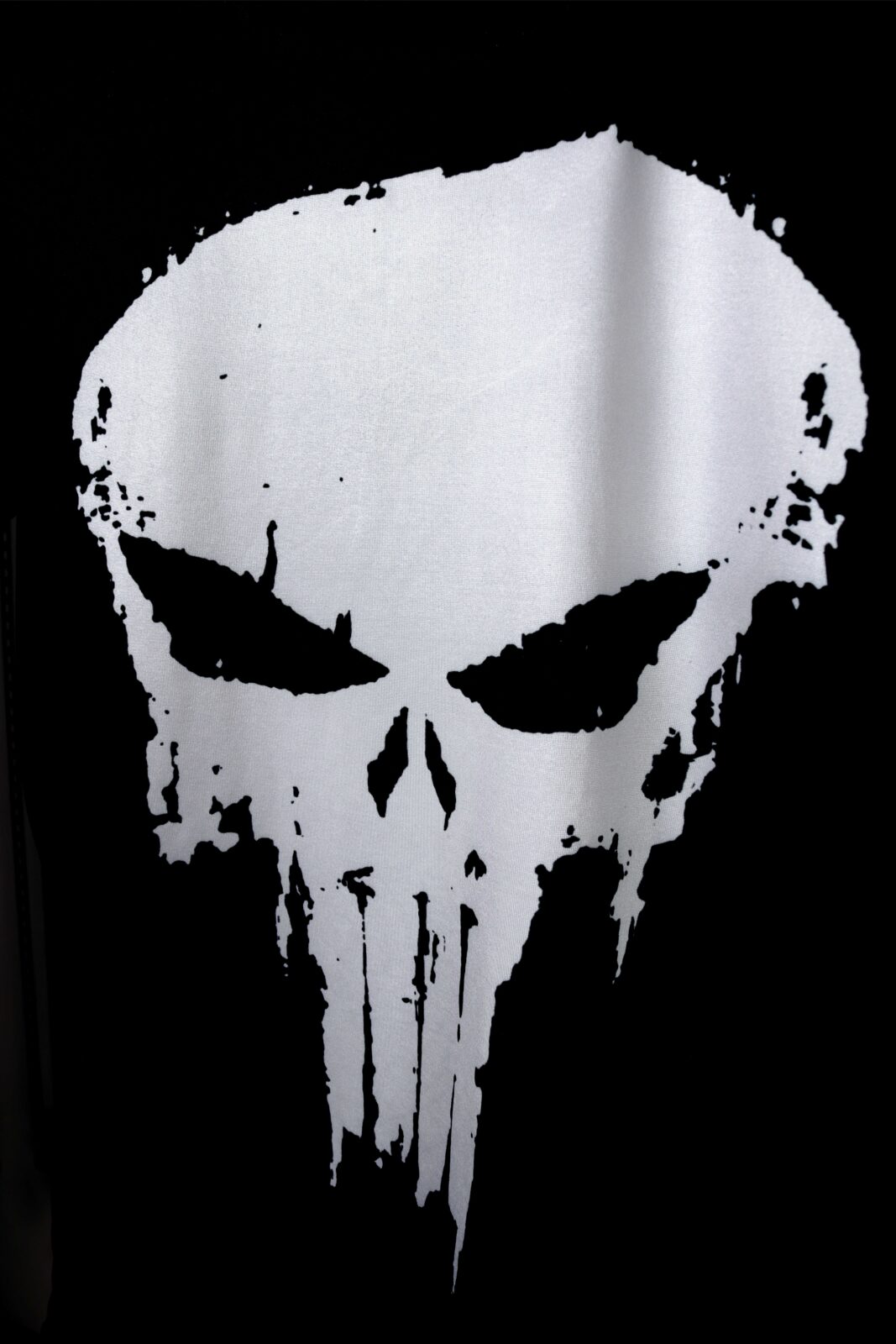
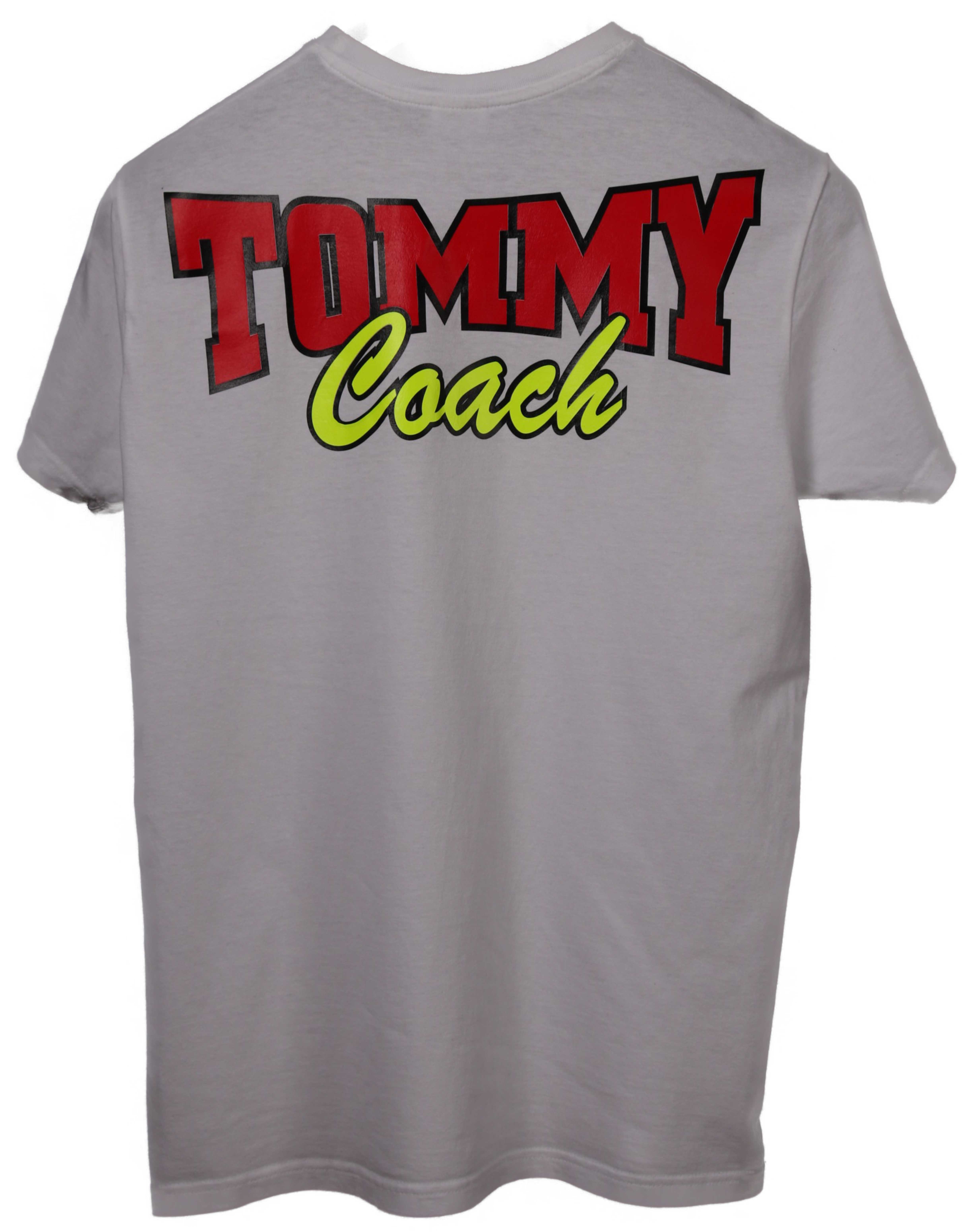
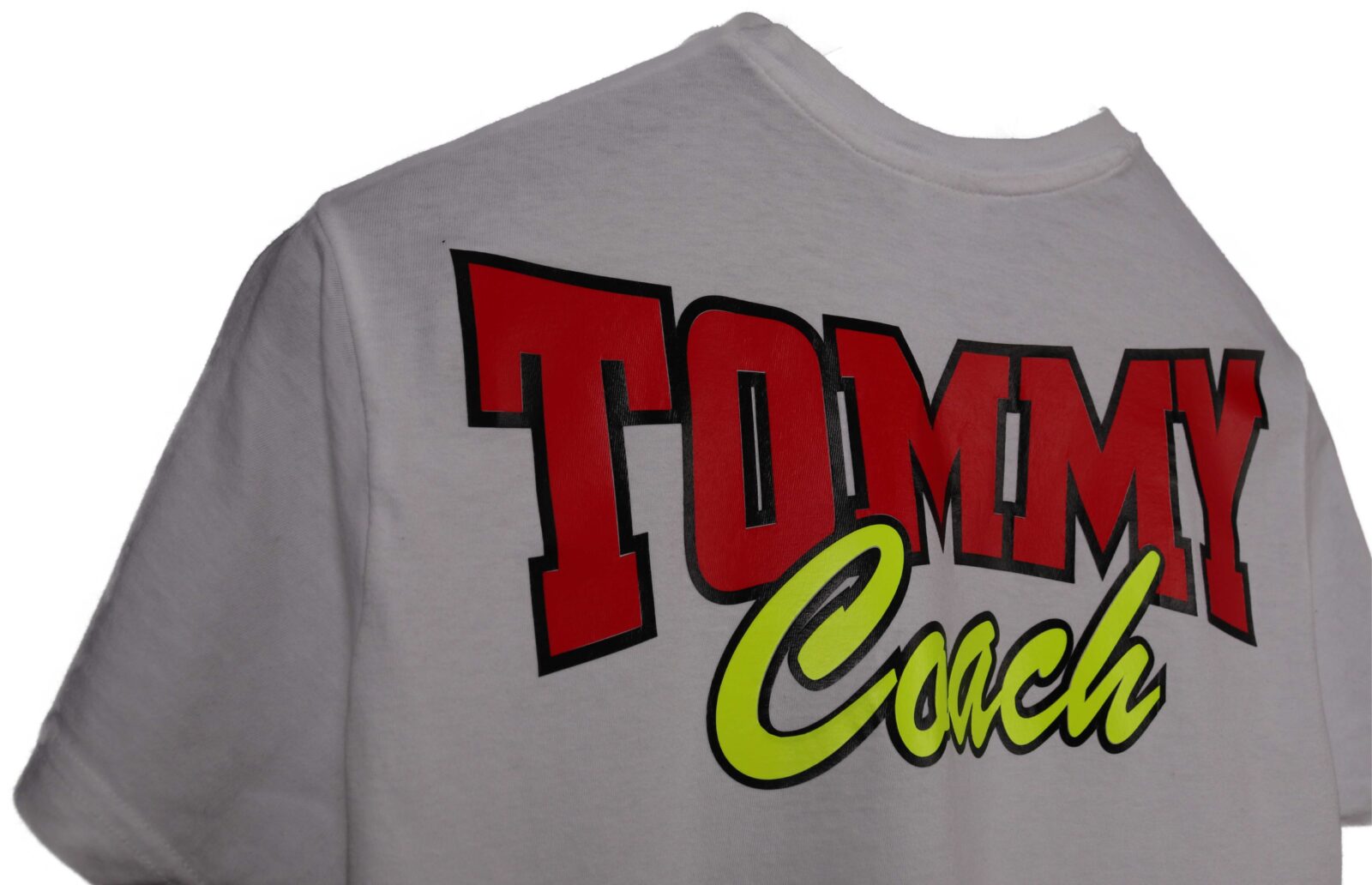
4. Option for special effects, such as the use of fluorescent or metallic inks and inks with a “puff” effect.
Disadvantages:
1. Minimum order of 50 pieces.
2. Maximum of 6 colors per design.
3. Printing is not possible near seams or in hard-to-reach areas, nor on complex garments such as jackets.

Transfer Screen Printing
Screen printing transfer is a printing technique in which the design is first printed onto special transfer paper using screen printing. The transfer is then applied to the fabric using a heat press.
Advantages:
1. Fast production process.
2. Option to produce transfers in advance and apply them to textiles as needed.
3. Excellent value for money.
4. Special effects such as 3D designs or special colors: fluorescent, reflective, and metallic.
Disadvantages:
1. Lower breathability and softness compared to direct screen printing.
2. Not suitable for printing on umbrellas or materials with a water-repellent finish.
3. Over time, cracks may form, which are typical for thermal transfers.
DTF Transfer
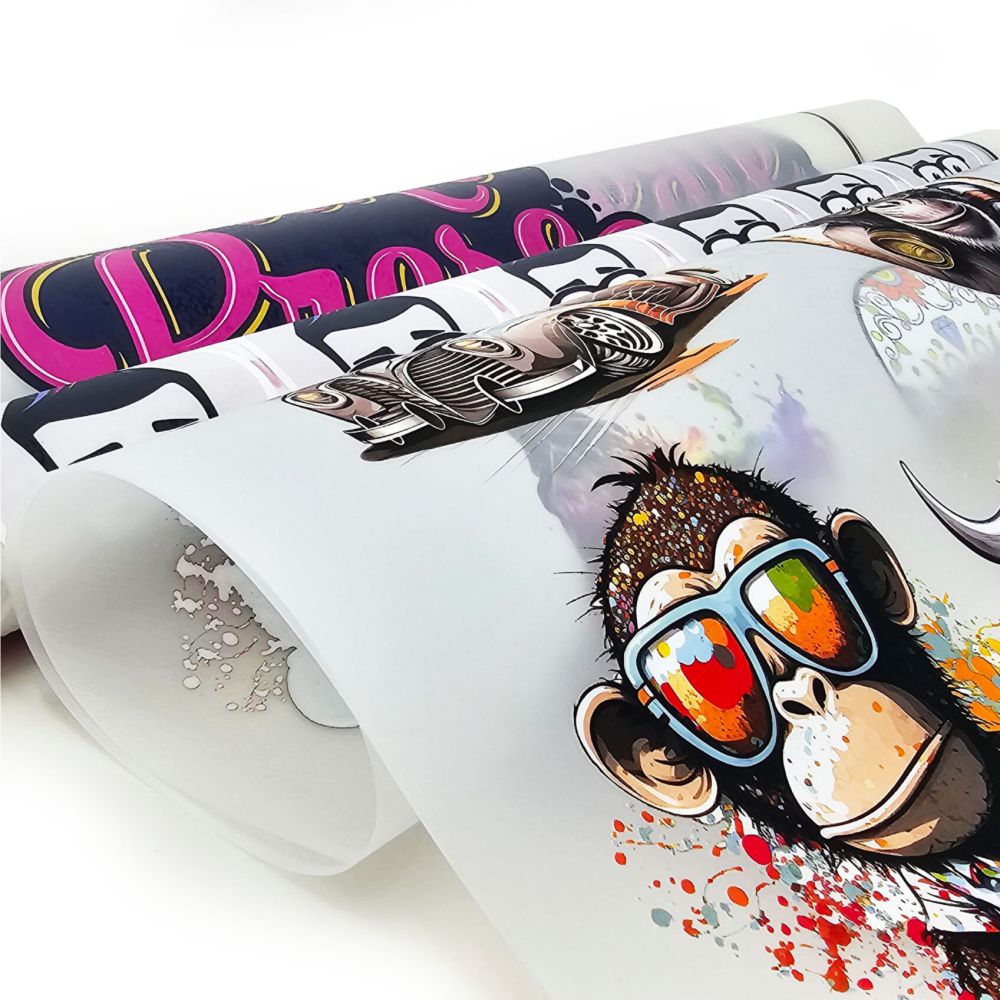
DTF (Direct-to-Film) transfer is a textile printing method in which the design is printed directly onto a special film and then transferred to the fabric using a heat press.
Advantages:
1. Long lifespan and high quality—sharp, detailed high-resolution prints.
2. Full-color printing available with no color restrictions and no additional cost.
3. Affordable pricing even for smaller quantities.
4. Ability to print on various types of fabrics (cotton, polyester, blended fabrics, etc.).
Disadvantages:
1. Lower wash resistance compared to screen printing and screen-printed transfers.
2. Not suitable for printing on umbrellas or water-repellent materials.
3. Less breathable than sublimation printing.

Sublimation
Textile sublimation is a process in which a special sublimation ink, at high temperatures (around 200°C), changes from a solid directly to a gas, without passing through a liquid phase. This gas then penetrates the polyester fibers of the fabric, where it returns to a solid state.
Advantages:
1. High durability and resistance to washing, UV radiation, and mechanical damage.
2. High print quality—vibrant colors, sharp details, and smooth color transitions.
3. The fabric’s breathability is preserved, and printing can even be applied across seams.
4. There are no color restrictions, and using multiple colors does not increase the price.
Disadvantages:
1. Can only be used on materials with a high polyester content.
2. Only white or light-colored fabrics can be printed on for the colors to stand out properly.
3. Higher price.
Flex Film
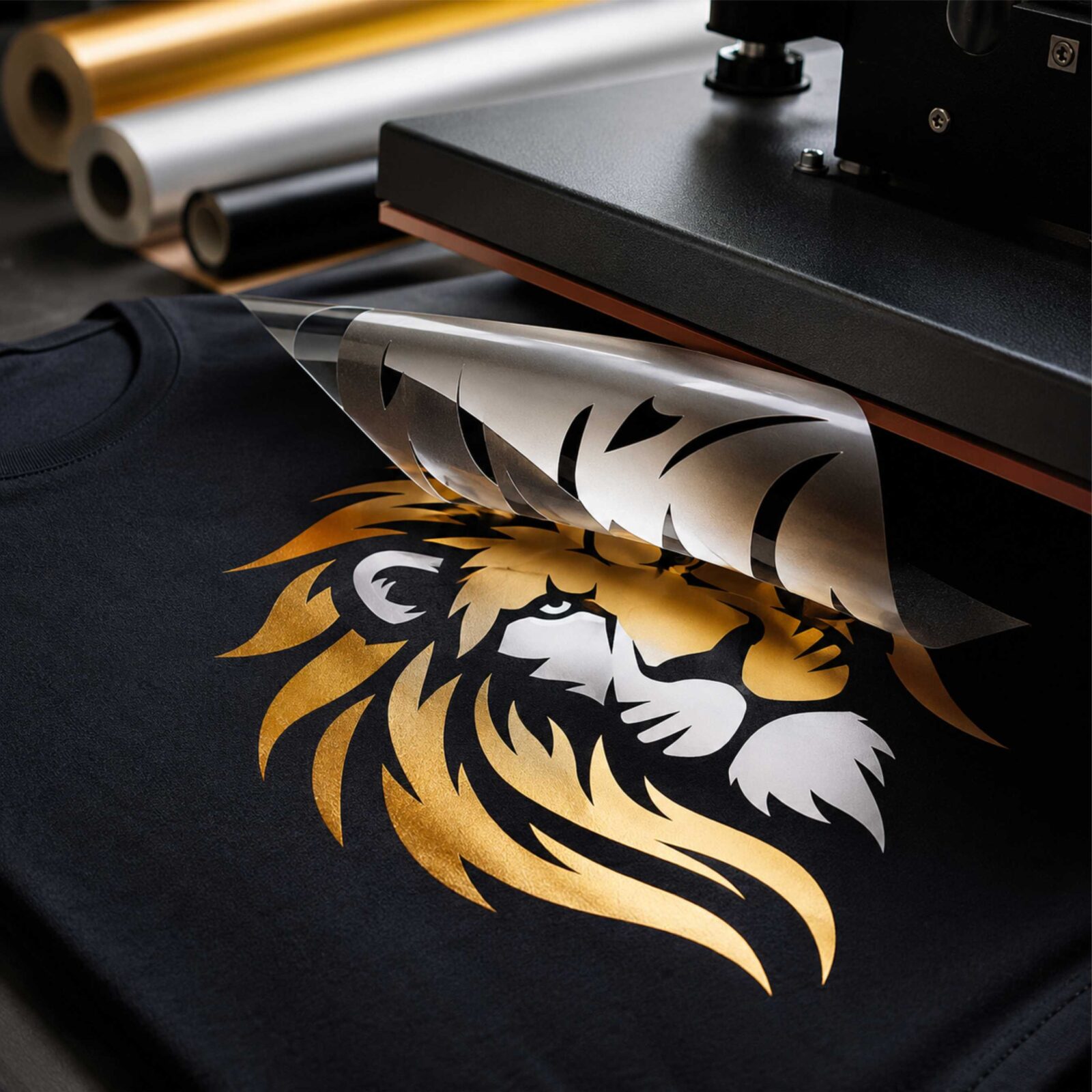
Flex foil is a textile printing method in which the design is cut out of colored iron-on foil using a plotter and then transferred to the fabric using a heat press.
Advantages:
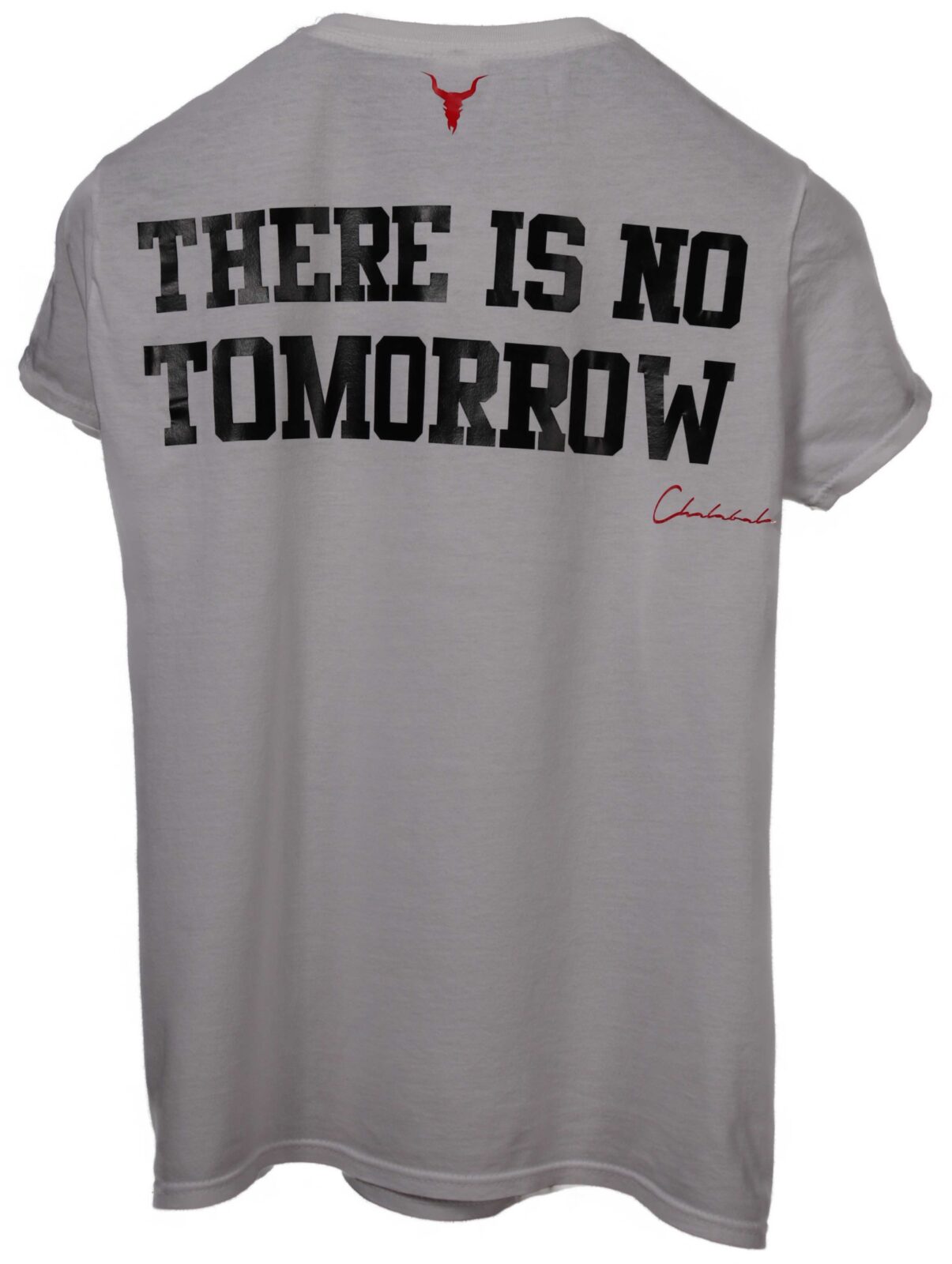
1. High durability and long lifespan—the print is firmly bonded to the fabric and withstands washing well.
2. Vibrant, rich colors with crisp edges and no blurring of details.
3. Suitable for small runs and single-item orders.
4. Ideal for simple logos, text, and single-color designs.
Disadvantages:
1. Not suitable for complex or photorealistic motifs.
2. Each color must be cut separately, which limits multicolor gradients.
3. Less breathable print area for larger designs.